
Drought is not just a dry summer. It’s something that is starting to weigh heavily on our European economy, and not just a little. The European Central Bank is sounding the alarm, and frankly, it gives food for thought. We’re talking about losses that could cost us dearly, much more than we might initially imagine. The consequences affect everyone, from fields to factories, and our wallets.
Key Takeaways
- Drought represents a major risk to the euro area’s GDP, threatening up to 15% of its output during extreme episodes.
- Surface water scarcity is identified as the most significant risk to the European economy, with cascading effects on agriculture, hydropower, and river transport.
- European companies are highly dependent on natural resources, and drought increases risks for bank loans, requiring better integration of water-related risks into financial analyses.
- The agricultural sector is particularly vulnerable, but exposure to drought risk is increasing across Europe, including in the central and northern parts of the continent.
- Drought contributes to inflation in Europe through anticipated increases in water and food prices, affecting production and consumption costs.
The economic impact of drought on European GDP
Estimates of gross value added losses due to climate events
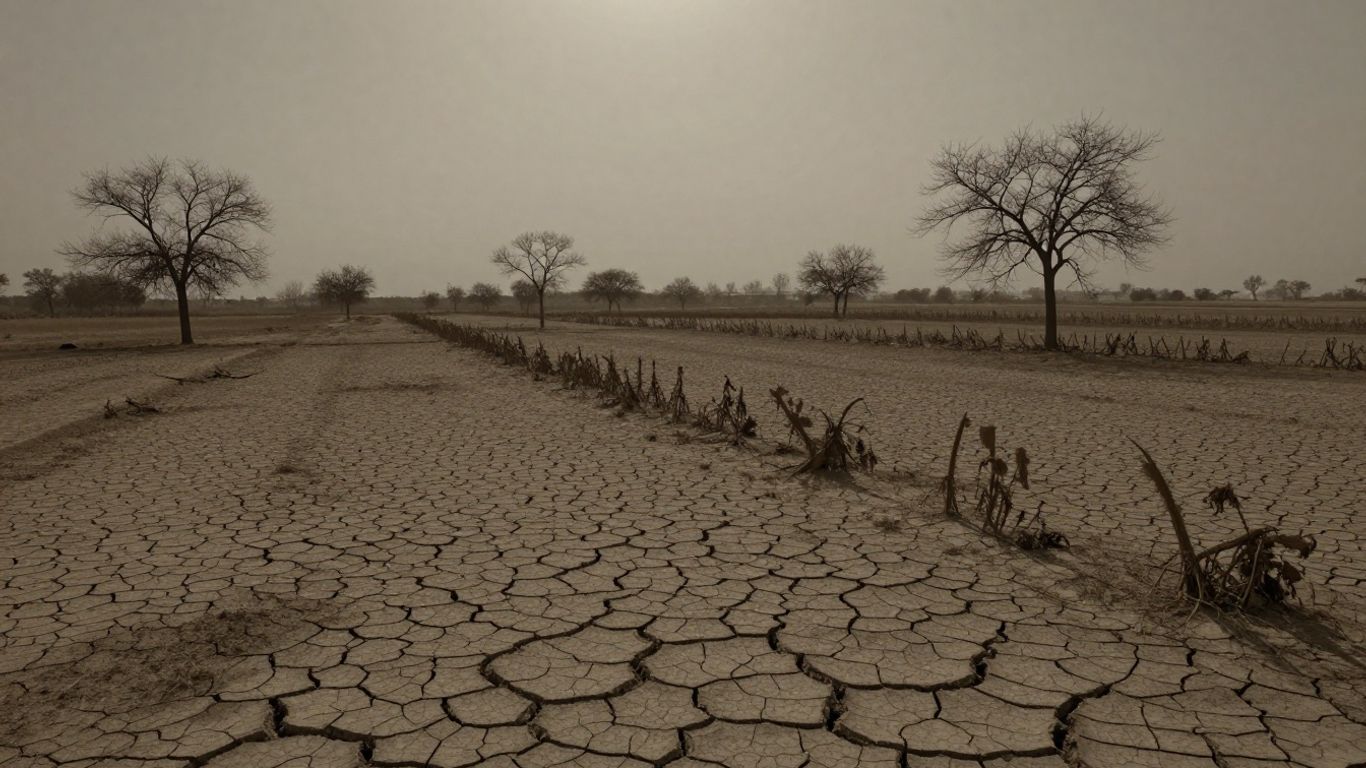
Drought is not just about yellowing fields and drying rivers. It comes at a significant cost to all of Europe. We’re talking about billions of euros lost every year. For example, last summer, drought episodes cost the European Union nearly €30 billion, a 0.18% drop in gross value added. And it doesn’t stop there, as the effects are felt for years. By 2029, these losses are estimated to reach €76 billion. That’s enormous when you think about it. These figures clearly show that climate change is not a distant threat, but a reality that is already affecting our economies. We really need to be aware of these impacts to be able to act.
Projection of short- and long-term economic costs
The economic consequences of drought are not limited to immediate losses. They extend into the long term, creating cascading effects that are difficult to anticipate. Extreme droughts can lead to reduced agricultural yields, slowed industrial production, and increased production costs. Furthermore, the decline in water quality is already affecting tourism in some regions, causing losses of over €100 billion per year. These cumulative impacts threaten the financial stability of the euro area. Projections show that these costs will increase over time, making the situation even more critical in the coming years. It is therefore imperative to integrate these risks into our economic strategies.
Analysis of repercussions on euro area production
Drought represents a major risk to euro area production. Experts estimate that up to 15% of production could be threatened in the event of extreme episodes, which are becoming increasingly frequent. Surface water shortages, in particular, have devastating effects. They limit agricultural production, affect hydropower and river transport, and impact water quality. We can see that everything is interconnected. Businesses are heavily reliant on natural resources, such as water, food, or wood. When these resources become scarce or degrade, the entire production chain is disrupted. Therefore, solutions must be found to better manage water and adapt to these new climatic conditions. Innovation in water management, such as that seen in solar projects in the desert [6905], could offer avenues.
Extreme climate events, such as droughts, are no longer anomalies but a new norm. Their economic repercussions on European GDP are considerable and require urgent adaptation of policies and practices.
Drought and its effects on water resources in Europe
Drought, an increasingly prevalent climatic phenomenon on the continent, is putting a severe strain on our precious water resources. It’s not just a matter of rivers running low or dry soil; it has much broader repercussions on our economy and daily lives.
Risks associated with surface water scarcity for the economy
When watercourses dwindle, an entire sector of the economy is affected. Surface water is the basis for many activities. We’re talking about agriculture, of course, but also industry, which needs water for its processes. Surface water scarcity is identified as the most significant risk to the euro area economy. Companies are heavily dependent on these natural resources; it is estimated that 72% of them critically depend on goods provided directly by nature, such as drinking water or plant-based raw materials. A scarcity of these resources can lead to major disruptions in supply chains and increase production costs. The impacts can be felt quickly, affecting production and the availability of consumer goods. Europe is experiencing increasingly marked drought episodes, as shown by satellite observations of the state of water reserves.
Consequences for hydropower and river transport
Water is also energy and a means of communication. The drop in river and stream levels has a direct impact on hydropower production. Less water means fewer turbines operating, and therefore reduced electricity production. This can make us more dependent on other energy sources, which may be more expensive or less environmentally friendly. Similarly, river transport, an economical and ecological mode of transport for many goods, is severely slowed down, or even stopped, when waterways lack water. Barges can no longer navigate or must reduce their cargo, leading to delays and increased costs for companies that rely on this mode of transport.
Impact on water quality and tourism
Drought affects not only the quantity of water but also its quality. With less water, pollutants become concentrated, making the water less clean. This poses problems for human consumption, but also for aquatic ecosystems. Beaches and natural sites that depend on the presence of water may see their attractiveness diminish. We have already seen tourist regions suffer from declining water quality, with a decrease in visitors and therefore significant economic losses. Tourism, which represents a significant portion of GDP in some regions, is therefore directly threatened by these water changes. Water resource management is therefore a major issue for the sustainability of these sectors.
Water scarcity and degradation of its quality are direct consequences of drought that affect not only the environment but also entire sectors of the European economy, from transport to energy production, including tourism.
Vulnerability of European companies to drought
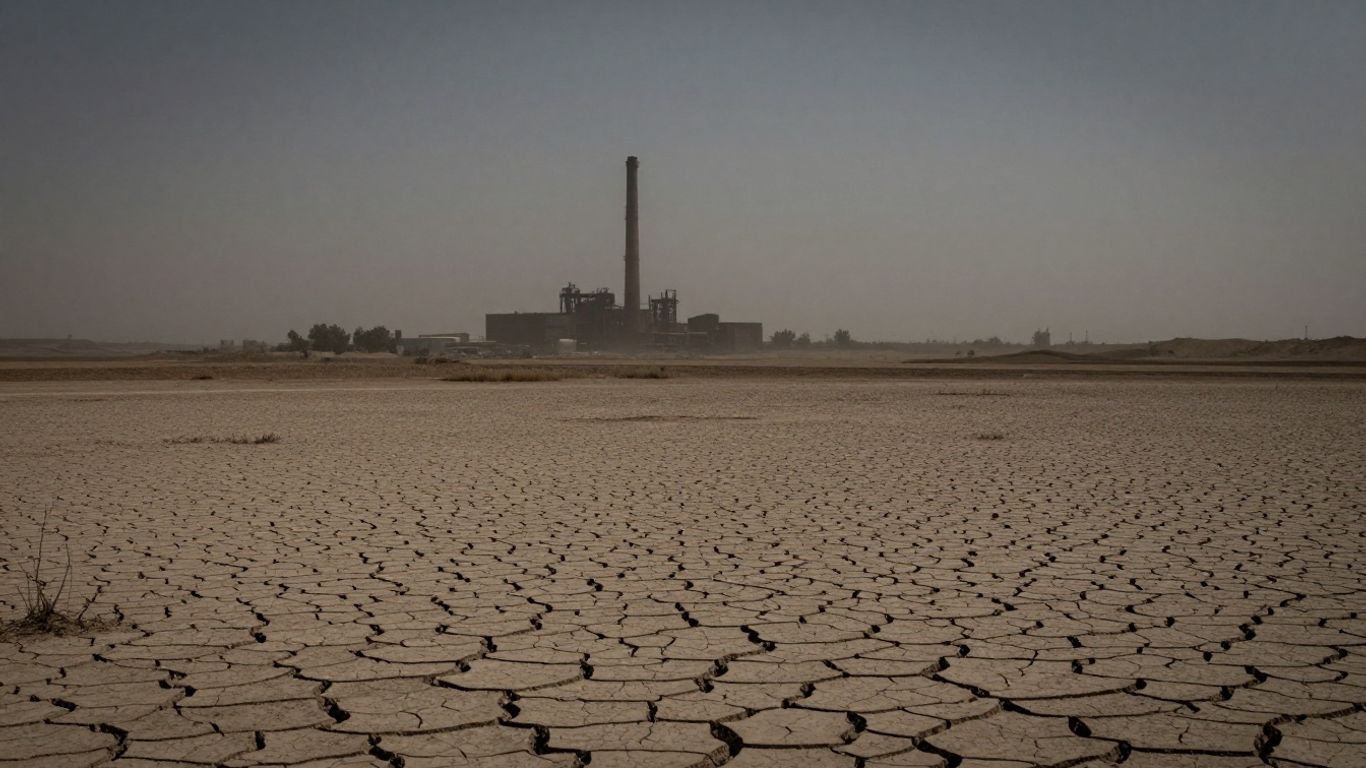
European companies are increasingly exposed to climate risks, and drought in particular. It is estimated that 72% of euro area companies depend directly on what nature provides: water, food, wood, and even plants for medicine. When it doesn’t rain enough, it poses a real problem.
Critical dependence of companies on natural resources
It’s simple, many companies need water to operate, whether for their direct production or their supply chains. Agriculture, for example, is on the front line. But that’s not all. The manufacturing industry, the energy sector, and even tourism are affected. Imagine a factory that needs water to cool its machinery, or a hydroelectric power plant that can no longer produce electricity due to insufficient flow. The consequences are quickly felt in production and costs.
Increased risks for bank loans exposed to drought
The European Central Bank is sounding the alarm: over €1.3 trillion in bank loans are granted to companies that are highly sensitive to drought. If these companies struggle to repay their debts due to water shortages, this can create problems for banks. This is a risk to the financial stability of the entire euro area. We really need to look more closely at who is lending to whom and for what purpose, especially as the climate changes. The renewable energy sector, for example, is seeking to grow and raise funds for solar and wind projects, but even these sectors can be indirectly affected by water shortages that impact the overall economy [c78e].
Need to integrate water-related risks into financial assessment
It is becoming essential for financial institutions to take water-related risks into account in their analyses. Ignoring these factors is taking a risky gamble on the future.
Companies must therefore adapt. This includes better water management, diversification of supply sources, and investment in less water-intensive technologies. Public authorities also have a role to play in helping companies in this transition, by implementing appropriate regulations and supporting innovation.
Sectors most affected by drought in Europe
Fragility of the agricultural sector to prolonged drought episodes
Agriculture is undoubtedly the sector that suffers the most when rainfall is scarce for long periods. We are talking about losses of up to 30% of production in Southern Europe, whereas this figure is lower, around 12%, in countries like Finland. This is a real concern for farmers, especially as crucial months for crops approach. Yields are falling, costs are rising, and product quality can also suffer. It’s a vicious cycle that directly affects our food supply.
Differentiated impact across European regions
The consequences of drought are not the same everywhere. Southern European countries, such as Spain, Italy, or France, are recording significant economic losses. But as a percentage of their national wealth (Gross Value Added, or GVA), Greece and Bulgaria are particularly affected. It’s as if a small loss represents a large part of their total economy. Heatwaves, which go hand in hand with drought, also come at a cost, causing billions of euros in losses, with France and Spain again among the most affected.
| Country | GVA Losses 2025 (Billions €) | GVA Losses 2029 (Billions €) | Relative Impact GVA 2025 (%) | Relative Impact GVA 2029 (%) |
|---|---|---|---|---|
| Spain | 27.6 | 27.6 | – | – |
| Italy | 17.5 | 17.5 | – | – |
| France | 13.7 | 13.7 | – | – |
| Greece | -2.9 | -2.9 | -1.13 | -1.13 |
| Bulgaria | -2.73 | -2.73 | -1.06 | -1.06 |
Increasing exposure to risk in Central and Northern Europe
It is no longer just Southern Europe that is affected. We are increasingly seeing that central and northern regions are also exposed to these risks. Even countries that were less affected by drought are now facing episodes of intense heat and water shortages. Ironically, these same northern regions can also experience more floods, which highlights the complexity and unpredictability of the climate. The transition to renewable energy, such as solar and wind, is a way to strengthen resilience, even if the initial investments are substantial [9b2f].
Extreme climate events, such as prolonged droughts, have economic repercussions that intensify over time. Short-term losses do not always reflect the full impact, which can be felt for several years after the initial event.
It should be noted that 72% of European companies depend directly on what nature provides: water, food, wood, etc. When these resources become scarce, the entire economy is weakened. Heatwaves, for example, have an impact on the European economy [8d8d].
Drought as a factor in inflation in Europe
Drought is causing inflationary pressures across the entire European economy. Here’s how it affects multiple aspects of prices and costs for people and businesses.
Anticipated rise in water and food prices
When water becomes scarce, the prices of this essential commodity inevitably rise. But that’s not all:
- Agricultural production declines, which drives up the costs of vegetables, fruits, and cereals.
- Livestock farmers pay more to feed their animals, and dairy products or meat also become more expensive.
- Some municipalities, driven by shortages, are increasing prices for drinking water.
- Europe has already experienced an estimated economic loss of €43 billion in 2025 due to these extreme events, a phenomenon analysed in the study on record economic losses linked to drought.
In a context of imbalance between limited supply and stable demand, European consumers quickly feel the impact on their daily budgets.
Cascading effects on production and consumption costs
The rise in prices is not limited to food or water. A chain reaction is observed:
- Companies see their energy costs increase, especially when hydropower is running at reduced capacity or river transport is hampered by water shortages.
- Manufacturers and distributors sometimes pass these additional costs on to their customers.
- Households, already affected by inflation on essential goods, also feel these increases in the cost of everyday consumer goods.
| Affected sector | Type of increased cost |
|---|---|
| Agriculture | Input prices, irrigation |
| Energy | Hydropower, logistics |
| Food | Raw materials, transport |
Contribution of climate events to price instability
Extreme climate events, such as droughts or floods, abruptly alter market balances. Volatility increases, and prices can change very quickly, depending on the affected regions and the intensity of the episodes.
- The global supply of agricultural products fluctuates more than ever, which weakens food security.
- In some southern countries, the impact of drought is so severe that even imported products become more expensive than before.
- Price adjustments are not always temporary – some increases, such as those for drinking water, are likely to last.
Inflation is therefore not solely linked to monetary policy; it also stems from what is happening on the ground: each heatwave, each dry spell, can, on its own, disrupt the price chain for a long time.
Geographical consequences of drought in Europe
Major economic losses in Southern European countries
Countries in Southern Europe are clearly the most affected by drought episodes. Spain, for example, has seen its economic losses estimated at over €10 billion for the year 2025, with projections rising to nearly €28 billion by 2029. Italy and France are not spared, suffering respective losses of several billion euros over the same period. These figures give an idea of the scale of the damage, especially when compared to the gross value added (GVA) of these countries. Greece and Bulgaria, for example, see their GVA reduced by more than 1% in 2025 due to these climate events.
High relative impact in Greece and Bulgaria
While absolute losses are higher in large economies like Spain or France, the relative impact on GVA is particularly striking in Greece and Bulgaria. These countries see their national economic output disproportionately affected by drought. This highlights a structural vulnerability to climate risks, which can have lasting repercussions on their development.
Increased flood risks in northern countries
Paradoxically, while Southern Europe suffers from drought, countries in the north and centre of the continent are seeing their exposure to climate risks increase, but in another form: floods. Countries like Germany and Austria, which were not traditionally considered high-risk areas for this type of disaster, are now suffering significant economic losses due to floods. This clearly shows that climate change does not manifest uniformly and that each region must prepare for specific and sometimes unexpected risks. The closure of factories, such as Meyer Burger’s in the photovoltaic sector in Germany, can also be indirectly linked to higher production costs due to changing climatic conditions, affecting the competitiveness of European companies.
Europe is facing a complex climate reality where drought is hitting the south hard, while the north and centre must contend with an increase in flood risks. These phenomena, although different, have significant and growing economic consequences across the continent.
In conclusion: a challenge that concerns us all
It is clear that drought is not just a weather problem. It affects our economy, our businesses, and even our access to water. The European Central Bank is sounding the alarm, and the figures speak for themselves: billions of euros in losses, entire sectors weakened. Southern countries are already on the front line, but no one is truly safe. We really need to take this seriously, as the consequences will only intensify over time. It is a challenge that requires us to rethink our way of doing things, to protect both our environment and our prosperity.
Frequently Asked Questions
What is drought and why is it a problem for Europe?
Drought is when it doesn’t rain enough for a long time. In Europe, this causes major problems because there isn’t enough water for agriculture, for producing electricity with water, for transport on rivers, and even for tourism. The European Central Bank says it can be very costly for the economy.
How does drought affect our money and our economy?
When there is less water, harvests are poorer, which drives up food prices. Electricity can become more expensive if we cannot use water from dams. Businesses that use a lot of water or natural products have more difficulty operating. All of this can reduce a country’s wealth, which is called GDP.
Which sectors suffer most from drought?
Agriculture is the most affected, as plants need water to grow. Regions in Southern Europe, like Spain or Greece, are often the most affected. But even northern countries are starting to have problems.
Can drought cause problems for banks?
Yes, it’s possible. Many businesses, especially in agriculture, have loans from banks. If these businesses have major problems due to drought and cannot repay, it can create issues for banks and for the stability of money in the country.
Can drought make things more expensive, like inflation?
Absolutely. When there is less water, the price of water increases. Farm produce costs more because there is less production. These price increases can spread to other products and services, leading to inflation, meaning everything becomes more expensive.
Does drought have different consequences depending on the location in Europe?
Yes, the consequences are not the same everywhere. Southern European countries, which are already accustomed to warmer and drier climates, are often the most affected by water shortages. But researchers have noticed that even northern countries are increasingly affected by these problems.


