
Key points
The Energiewende is a long-term transformation of Germany’s energy system, not merely a programme to develop renewable electricity. Progress in wind and solar power is clear, but climate targets and grid constraints remain areas to watch.
- The term refers to the energy transition under way in Germany.
- The project combines renewable energy, energy efficiency and emissions reduction.
- The phase-out of nuclear power was completed in 2023.
- Wind and solar power have grown substantially in electricity generation.
- Coal, grids and local acceptance remain significant challenges.
What does Energiewende mean?
The Energiewende is often described as one of Europe’s major energy transformation projects. It concerns electricity generation, but also the way homes, transport and industry use energy. To understand its scope, we need to look at the meaning of the term and the people and organisations driving this transition.
Origin and meaning of the German term
In German, Energiewende literally means ‘energy turnaround’ or ‘energy transition’. The word has come to describe an intention to redirect the energy system, particularly by reducing the role of nuclear power and fossil fuels in favour of renewables and energy efficiency. It refers to a political and social project as much as to a change in technology.
This approach grew out of debates about nuclear risks, environmental protection and dependence on fossil fuel resources. It was then translated into public targets, support mechanisms and investment. The term therefore encompasses a trajectory that evolves in response to political choices and practical constraints.
A transformation of the energy system, beyond electricity
The first visible step in the Energiewende was the growth of renewable electricity. But the task extends well beyond power stations and wind turbines: it also affects heating, transport, industrial processes and energy saving. A complete transition requires emissions to be reduced in these sectors, where change is often slower and more difficult to measure.
The term is therefore broader than a simple change in the electricity mix. It includes building renovation, mobility and industrial production, as well as the infrastructure needed to integrate renewable energy. An overview of the energy transition as a whole helps put these issues, which are shared by several countries, into context, even though national choices differ.
The role of government, businesses and citizens
The government sets targets and defines the rules that guide investment. Businesses build and operate facilities, adapt their processes and invest in energy efficiency. Citizens take part as consumers, taxpayers, local residents or owners of renewable energy installations.
This range of stakeholders explains why the transition cannot be reduced to a decision made at national level. Projects must be funded, authorised and connected to the grid, while their costs and benefits are shared between different groups. In homes, renovation work is one part of this change, although the sale of a house also depends on property-related factors beyond energy considerations.
How did Germany’s energy transition take shape?
The Energiewende developed in stages, shaped by social movements, political decisions and changes in energy markets. Early measures supported renewables, while decisions on nuclear power and climate policy later gave the project a broader national scope. This gradual development explains both its continuity and the debate it generates.
Early policies to support renewable energy
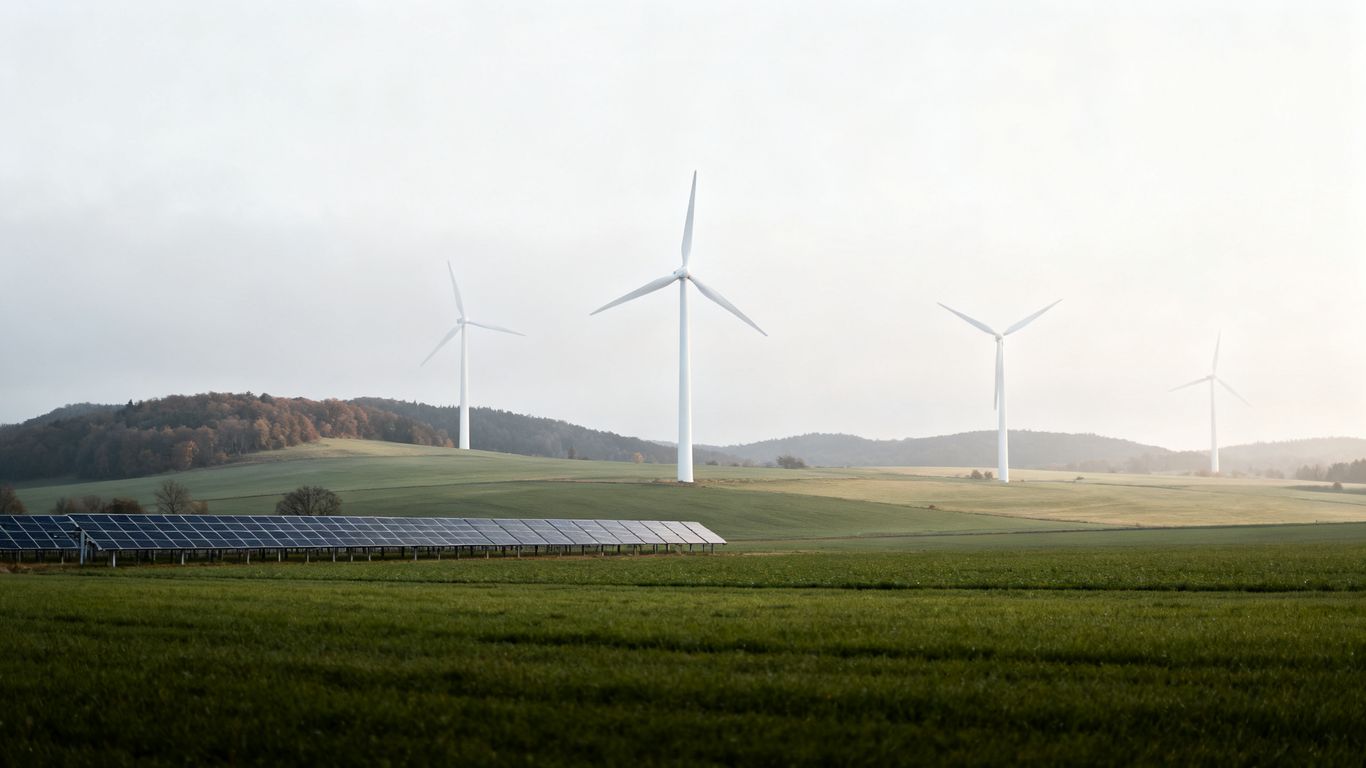
Public support helped make wind and solar projects more attractive to investors and producers. Remuneration mechanisms provided more predictable conditions for selling electricity, encouraging the installation of new capacity. The Renewable Energy Sources Act, adopted in 2000, played a key role in this phase.
Growth was not uniform: progress depended on the technologies available, the rules in force and access to the grid. Project financing also requires an assessment of expected revenues, permits and connection conditions. By way of comparison, an analysis of energy project financing in Italy shows how much the regulatory framework can affect whether projects are bankable.
The nuclear phase-out and its stages
The nuclear phase-out was decided and then adjusted in response to events and changes of government. Following the Fukushima disaster in 2011, Germany accelerated the timetable for closing its power stations. The last reactors stopped generating electricity in April 2023, completing an emblematic stage of the Energiewende.
This decision changed the composition of the electricity system and heightened attention to security of supply. It also fuelled debate about how to reconcile decarbonisation, electricity availability and technology choices. Closing the reactors alone is not enough to assess the overall climate impact: changes in coal, gas and renewables must also be considered.
The laws and mechanisms governing the transition
The transition framework is based on laws that set climate targets and define how renewable energy is supported. Auctions, regulatory obligations and grid connection rules have gradually become increasingly important. They influence the pace at which projects are developed and how risks are shared between stakeholders.
A few milestones help track this evolution, without reducing the project as a whole to a legal chronology:
| Period | Milestone | General significance |
|---|---|---|
| 2000 | Renewable Energy Sources Act | Support for the development of renewables |
| 2011 | Decision to accelerate the nuclear phase-out | Revision of the timetable for reactor closures |
| 2023 | Last reactors shut down | End of nuclear power generation in Germany |
| 2023 | Renewables provide more than 50% of electricity | A significant milestone in the transformation of the electricity mix |
These dates show that energy policy has been shaped through successive adjustments. On their own, they do not show whether climate targets have been met: emissions, consumption and the results of sectors that are changing more slowly must also be compared.
What are the objectives of the Energiewende?
The Energiewende brings together several objectives that reinforce one another, but can also come into tension during implementation. The aims are to reduce emissions, develop renewable energy and limit vulnerability to fossil fuels. At the same time, the transition must reach sectors that are not changing as quickly as electricity generation.
Reducing greenhouse gas emissions
Reducing emissions is one of the Energiewende’s main benchmarks. Germany’s climate framework provides for a substantial reduction in emissions compared with 1990, with interim targets and a goal of climate neutrality by 2045. Meeting this trajectory depends on the performance of the whole economy, not just electricity generation.
To measure progress, actual emissions and how they change over time must be examined, taking account of fluctuations in economic activity and consumption. Targets set a direction; they do not guarantee that every sector will progress at the same pace. This distinction is essential to understanding how progress in electricity can coexist with delays elsewhere.
Developing renewable energy and improving energy efficiency
Expanding wind and solar power is a central pillar, alongside efforts to manage demand. Generating more renewable electricity is not enough if energy needs rise or equipment remains inefficient. Energy efficiency therefore aims to deliver the same services — heating, transport or production — while using less energy.
These two levers complement one another. Renewable capacity provides low-carbon generation when conditions allow, while efficiency limits the demand to be met and the infrastructure required. Renovation measures, less energy-intensive equipment and better demand management can all support the overall trajectory.
Reducing dependence on fossil fuels and imports
Developing renewable resources produced domestically can help reduce dependence on imported fossil fuels. It does not remove that dependence automatically: Germany still has to manage its needs for gas and coal, as well as fluctuations in renewable generation. Energy security also depends on grids, reserve capacity and electricity trading with neighbouring countries.
This issue extends beyond Germany’s borders. Romania, for example, is pursuing renewable projects and support mechanisms in a different context, shaped in particular by grid constraints and investment in storage. Developments in Romania’s energy sector illustrate the diversity of national trajectories, without representing a model that can be directly replicated.
Transforming transport, buildings and industry
Transport, buildings and industry must reduce their use of fossil fuels and their emissions. In buildings, this involves improving energy performance and changing heating systems. In transport, the challenge is to reduce emissions from travel and develop solutions that are less dependent on fossil fuels.
Industry, for its part, must adapt its processes while maintaining production capacity. These changes require investment, infrastructure and implementation timescales that vary between sectors. This is why the Energiewende cannot be assessed solely by looking at the share of renewables in the electricity mix.
What tools are available to implement the transition?
Targets are put into practice through economic instruments, infrastructure and planning decisions. No single tool is enough on its own: a new installation must be financed, connected to the grid and integrated into the system. Public policy choices also determine who bears the costs of this transformation.
Grants and auctions for renewable energy
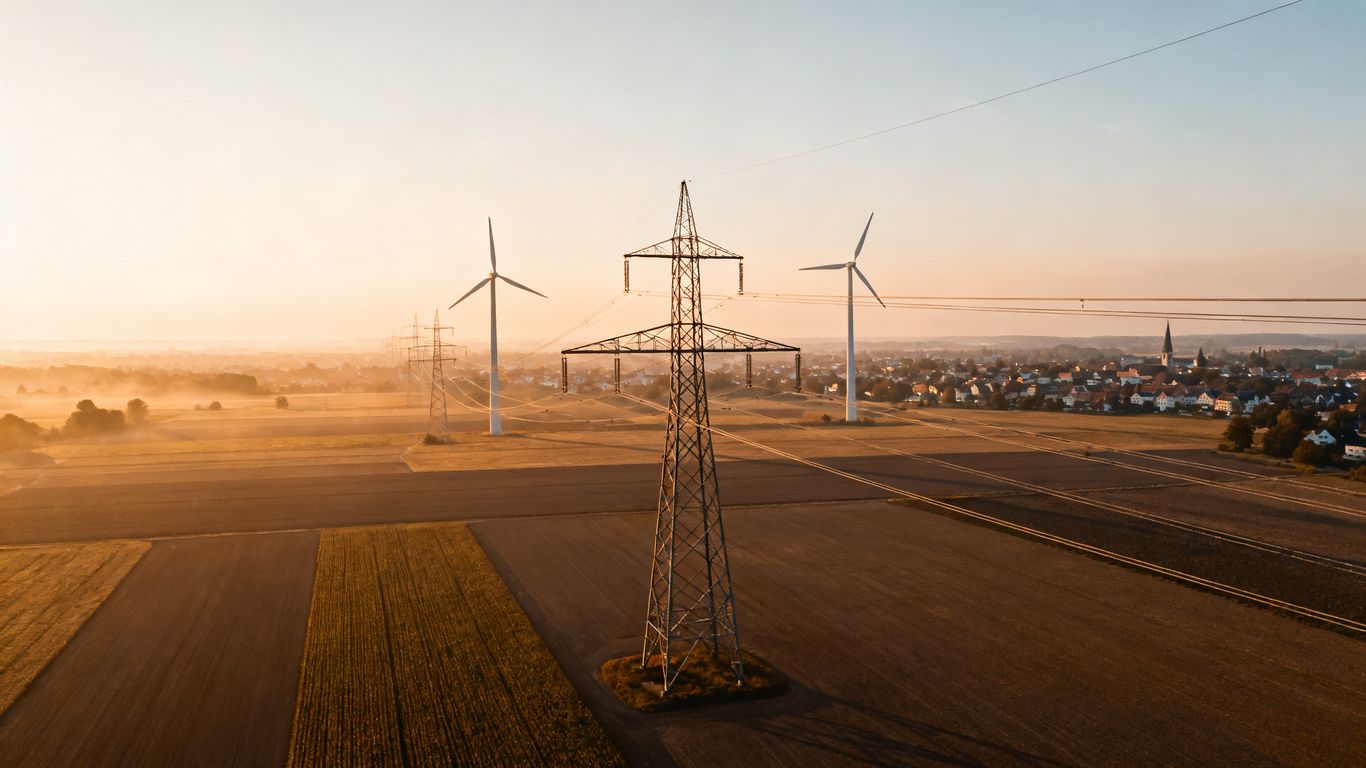
Public grants and auctions aim to accelerate the development of renewable capacity while keeping costs in check. The rules define eligible projects and the conditions for support, and can be adjusted as costs or system needs change. They directly influence investment decisions by businesses and local authorities.
Financing, however, is not limited to the level of support. Permits, grid connections and the predictability of revenue also affect whether a project is viable. Funding schemes available elsewhere, such as those described in a guide to energy transition grants, shed light on the options available to households and organisations, although the rules differ from country to country.
Strengthening grids and storage capacity
Grids must transport electricity from generation areas to consumers. In Germany, the development of wind power in the north and demand from the more industrialised southern regions make grid connections and transmission particularly important. Storage capacity can help shift some of the available energy to a later time, but it cannot replace an adequate grid.
Integrating variable generation therefore requires several coordinated responses: new lines, congestion management, storage and more accurate forecasting. The solutions for stabilising an electricity grid give an overview of these tools. Their deployment takes time and requires substantial investment, as well as coherent planning at local and national levels.
Demand flexibility and the role of dispatchable power stations
Demand flexibility means adjusting some consumption to periods when electricity is available. Within certain limits, some uses can be shifted through suitable equipment and tariffs. This helps align renewable generation with demand, without assuming that all consumers can change their habits in the same way.
When wind or solar generation is low, dispatchable power stations and cross-border electricity trading help balance the system. Their role raises a key question: how can a reliable supply be guaranteed while emissions are gradually reduced? The answer depends on the rate at which renewables are installed, reserve capacity and demand.
Sharing costs between households, businesses and public authorities
The costs of the transition are shared between different groups of stakeholders, depending on the mechanisms used and the period considered. Households may be affected by bills and renovation work; businesses, by investment and changes to their processes; and public authorities, by grants and infrastructure. How these costs are shared is also a matter of fairness and public acceptance.
To make the transition sustainable, schemes must take account of different economic circumstances and people’s ability to invest. Grants can reduce some of the upfront cost, but they do not eliminate the trade-offs. Globally, the issue also concerns access to energy: proposals to improve access to electricity in Africa show that the transition must be aligned with very different development needs.
What results has Germany achieved?
The Energiewende’s record is mixed: renewable generation has increased substantially, while other indicators are advancing more slowly. Germany has also transformed its electricity fleet by closing its nuclear power stations. To assess these changes, it is important to distinguish between results achieved and targets still to be met.
The growing share of wind and solar in the electricity mix
Wind and solar power have taken an increasingly large share of German electricity generation. In 2023, renewables supplied more than half of the country’s electricity, a milestone that marks considerable progress compared with the early years of the transition. This result reflects the expansion of installations and changes to the support framework.
However, the annual share does not reflect variations from one day or season to another. High output during windy or sunny periods does not guarantee the same availability at all times. Grid, storage and balancing capacity requirements therefore remain crucial.
Changes in emissions and energy consumption
German emissions have fallen compared with their 1990 levels, but this does not mean the trajectory is assured. The rate of reduction varies from year to year and between sectors. Energy consumption also matters: lower demand makes emissions reductions easier, provided essential needs and economic activity are maintained.
Comparing emissions, consumption and generation data helps avoid an oversimplified assessment. A high share of renewables is an important indicator, but it does not sum up progress in heating, transport or industry. Taking this wider view makes it possible to measure what has changed and what remains to be transformed.
The closure of nuclear power stations and its effects on the mix
The shutdown of the last reactors in 2023 completed the nuclear phase-out, one of the most visible choices in German energy policy. Following their closure, the system had to rely more heavily on other forms of generation and on electricity trading. The climate impact of this change therefore depends on which sources replace nuclear generation at any given time.
The issue cannot be reduced to a choice between one technology and another. Emissions, costs, power station availability and security of supply all need to be considered at the same time. These are the trade-offs that continue to fuel debate about the country’s energy trajectory.
Effects on employment, innovation and energy prices
The growth of renewables has generated investment in equipment, services and infrastructure. It has supported activities related to installation and maintenance, while encouraging innovation in energy technologies. These benefits are not evenly distributed: they depend on regions, industries and market developments.
Energy prices, meanwhile, are influenced by many factors, including generation costs, grids, international markets and support mechanisms. It is therefore difficult to attribute their changes to the Energiewende alone. To put Germany’s experience into context, Spain’s experience with renewable electricity provides a European point of comparison, without obscuring differences in the energy mix and public policy.
What limitations and challenges remain?
The results achieved do not remove the difficulties of implementation. Germany still has to reduce emissions in sectors that are lagging behind, ensure security of supply and build the necessary infrastructure. These challenges are interconnected: every technical choice can affect costs, timescales and local acceptance.
Delays in meeting some climate pathways and sectoral targets
Progress in renewable electricity generation does not automatically translate into sufficient emissions reductions across the whole economy. Transport and buildings, in particular, may move more slowly than the electricity sector. Climate targets therefore require consistent measures covering all energy uses.
Monitoring should be based on sectoral indicators, interim targets and measured results. A gap between a planned trajectory and observed emissions may call for new measures, but it may also reveal implementation delays. Assessments are more useful when they clearly distinguish between announcements, installed capacity and actual results.
Using coal and gas to ensure security of supply
Coal and gas are still used to meet some of the demand, particularly when renewable generation is insufficient. This makes emissions reductions more difficult and highlights the challenge of replacing dispatchable generation before complementary solutions are ready. The gradual phase-out of fossil fuels therefore depends as much on system reliability as on building new renewable capacity.
The issue is also linked to import dependence and prices. Reducing the use of fossil fuels requires demand to be managed, grids to be improved and suitable balancing resources to be available. The timescale for this change remains a subject of political and economic debate.
Challenges around local acceptance and infrastructure construction
Installations and power lines may face opposition from local residents. Concerns relate to landscapes, nuisance, nature or how benefits are shared. Planning permission procedures and local consultations can therefore affect how long projects take to complete.
Clearer planning and early dialogue can help people understand projects, without guaranteeing that every project will be accepted. How costs and benefits are shared also matters: affected communities need to understand the expected impacts and the choices made. Delays to infrastructure can limit the integration of generation capacity that is already installed.
Balancing energy security, cost and decarbonisation
The transition requires trade-offs between objectives that do not always align immediately. Accelerating investment can support decarbonisation but increase costs in the short term; prioritising security of supply may mean temporarily retaining higher-carbon generation. Decisions depend on demand, available infrastructure and technically feasible options.
These trade-offs call for regular assessment based on comparable data. Emissions, prices, grid reliability and social impacts all need to be monitored rather than relying on a single indicator. This approach helps make decisions more transparent and allows the course to be adjusted when results fall short of targets.
Lessons from the Energiewende for other countries
Germany’s experience shows that a large-scale energy transition requires consistent policies, investment and regular adaptation of infrastructure. It also shows that rapidly developing renewables does not, on its own, resolve issues around storage, grids or decarbonising energy use. Every country must take account of its resources, industry and energy needs.
International comparisons are useful as long as different contexts are not confused. Information about the German energy transition can provide further context, while an overview of the Energiewende and its objectives sets out its long-term ambitions. Even comparisons of data in very different fields, such as football statistics, are a reminder that an indicator only makes sense in context; the same caution applies to energy policy.
Conclusion
The Energiewende has profoundly transformed Germany’s electricity system and increased the use of renewable energy, but it has not yet resolved all the challenges related to emissions, grids and security of supply. Its record should be understood as a process under way: the results are real, the trade-offs remain numerous, and success will depend on the ability to extend decarbonisation across the whole economy.
Frequently asked questions
What does the word Energiewende mean?
Energiewende literally means ‘energy turnaround’ in German. The term refers to the energy transition under way in Germany.
What is the main objective of the Energiewende?
It aims to reduce greenhouse gas emissions and transform the energy system, particularly by developing renewables and improving energy efficiency.
Has Germany abandoned nuclear power?
Yes. Germany’s last nuclear reactors ceased operating in April 2023.
What role do renewables play in Germany?
In 2023, renewables supplied more than half of Germany’s electricity. Their share nevertheless varies depending on the period and generation conditions.
Why is coal still used in Germany?
Coal still helps meet electricity demand, particularly when renewable generation is insufficient. Its use remains a challenge for reducing emissions.
Does the Energiewende only concern electricity?
No. The transition also concerns transport, buildings and industry, which must reduce their use of fossil fuels and their emissions.
What are the main challenges facing Germany’s energy transition?
The challenges include reducing emissions in sectors that are lagging behind, strengthening grids, integrating renewables, ensuring security of supply and gaining local acceptance for infrastructure.


