
Key takeaways
The energy transition is transforming energy production, distribution, and usage. It relies on several complementary levers that must be deployed methodically to remain effective and socially acceptable.
- Reduce greenhouse gas emissions and dependence on fossil fuels.
- Act simultaneously on sobriety, energy efficiency, and low-carbon production.
- Adapt buildings, transport, industry, agriculture, and electricity grids.
- Anticipate investment needs, storage, skills, and raw materials.
- Make social justice and results monitoring central conditions for success.
Understanding the definition and objectives of the energy transition
The energy transition refers to the gradual transformation of how energy is produced, distributed, and consumed. It is not about replacing one source with another overnight, but about evolving an entire technical, economic, and social system. This approach concerns households, businesses, local authorities, and national infrastructure alike.
A transformation of the energy system
An energy system includes the resources used, production facilities, networks, equipment, and behaviours. The energy transition acts on each of these elements to reduce the role of fossil fuels and make usage more sustainable. It therefore requires long-term choices, but also concrete adaptations in daily life and economic activities.
This subject is not limited to electricity. Heating, fuels, industrial heat, and manufacturing processes are also concerned. A successful transformation must take into account the constraints of each use rather than applying an identical solution everywhere.
The difference between energy transition and ecological transition
The energy transition is one aspect of the ecological transition. It focuses on energy, its sources, its flows, and its uses, whereas the ecological transition encompasses a broader scope: biodiversity, resources, agriculture, waste, water, and production methods. These two approaches overlap, as energy choices directly influence emissions and ecosystems.
This distinction helps to avoid a narrow perspective. A technology may reduce emissions while requiring resources, infrastructure, or space that must also be evaluated. Therefore, the reflection must integrate impacts across the entire life cycle.
The objectives of decarbonisation, sobriety, and efficiency
Decarbonisation aims to reduce energy-related emissions. Sobriety consists of moderating consumption where possible, while efficiency seeks to provide the same service with less energy. These three orientations are different but mutually reinforcing.
In a company, this can involve analysing consumption, better organising working hours, renewing equipment, or reducing unnecessary travel. The coherence of actions matters more than an isolated measure: saving energy in one building is not enough if usage simply shifts to another, more polluting, area.
The role of renewable and low-carbon energies
Renewable energies, such as solar, wind, hydro, and geothermal, use naturally replenishing flows. Low-carbon sources more broadly encompass production methods with low life-cycle emissions. Their development must be accompanied by consideration of grids, storage, availability, and local needs.
Tomorrow’s energy mix will therefore likely be diversified. The question is not just about producing more, but about having energy available at the right time, in the right places, and at an affordable cost.
Why the energy transition has become essential
The energy transition primarily responds to a climate constraint, but it is not limited to it. Geopolitical tensions, market volatility, the depletion of certain resources, and pressure on natural environments reinforce its urgency. To understand this evolution, one must consider both environmental risks and economic vulnerabilities.
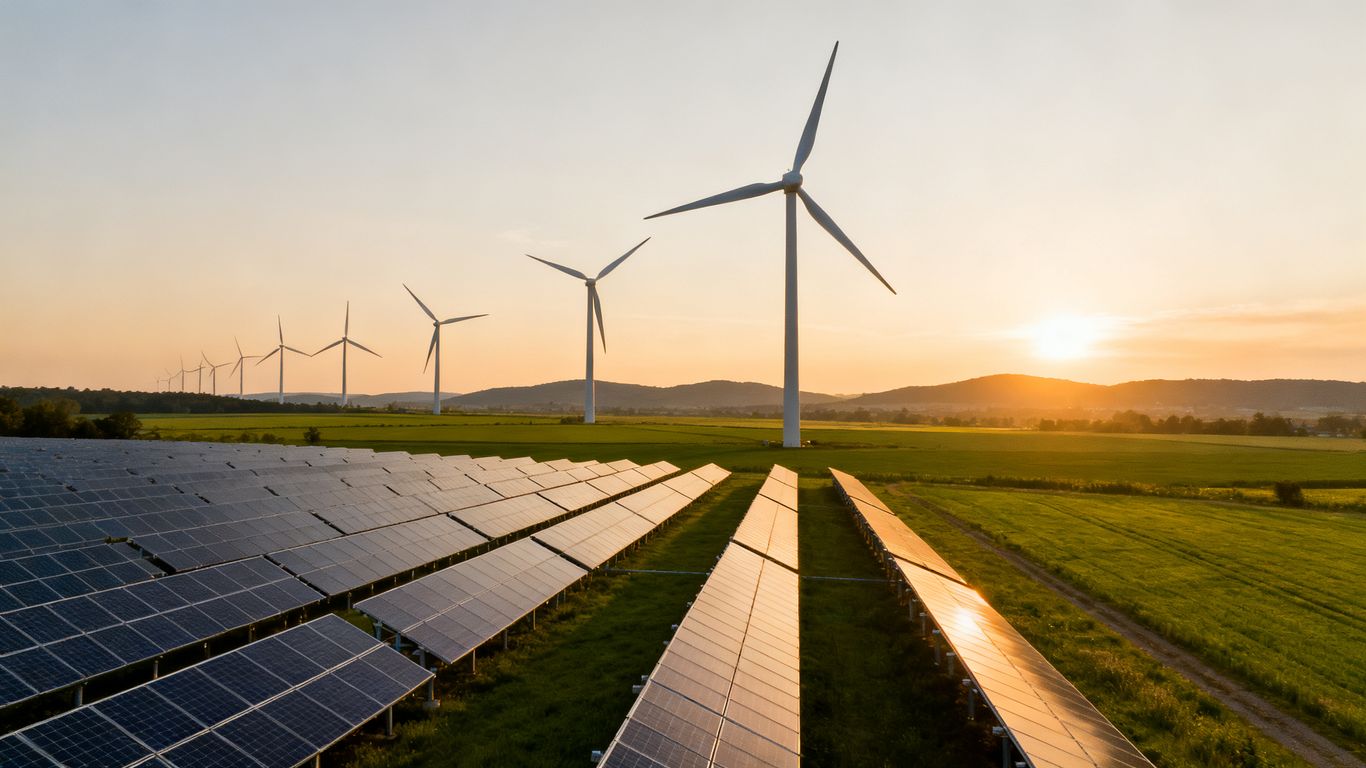
Reducing greenhouse gas emissions
The combustion of coal, oil, and gas emits a large quantity of greenhouse gases. These emissions contribute to global warming and exacerbate the risks associated with extreme weather events. Reducing fossil fuel consumption and developing less carbon-intensive alternatives is therefore a major focus of climate action.
Companies can start by measuring their direct and indirect consumption. An environmental footprint assessment helps to distinguish emissions related to buildings, purchases, travel, and supply chains.
Limiting dependence on fossil fuels
An economy heavily dependent on oil, gas, or coal remains exposed to price fluctuations and supply disruptions. Diversifying sources and reducing needs strengthens energy security. However, this evolution takes time, as infrastructure and equipment often have long lifespans.
Dependence can also be reduced through organisational choices: carpooling, bringing production closer to consumption sites, or improving equipment management. The transition then becomes a matter of resilience, as much as an environmental issue.
Responding to rising and volatile energy prices
Price variations affect households, industries, and public services. They make investment profitability calculations more uncertain and can strain already tight budgets. Improving energy performance reduces this exposure, even when the unit price of energy remains difficult to predict.
However, rising costs for low-carbon materials and technologies can create an effect of « greenflation ». An analysis of greenflation and its social effects reminds us why public policies must protect purchasing power while maintaining the course of transformation.
Preserving natural resources and biodiversity
Energy production and consumption require land, water, metals, and infrastructure. A well-designed transition must limit pressure on natural environments and avoid shifting impacts from one territory to another. Biodiversity also provides essential services, particularly for agriculture, water, and ecosystem resilience.
Material sobriety, reuse, and sustainable equipment design complement emission reductions. The choice of an energy solution must therefore integrate its effects on habitats, landscapes, and available resources.
The main levers of the energy transition
No single lever can transform the energy system on its own. Sobriety reduces demand, efficiency limits losses, while low-carbon energies modify supply. Electrification and renovation link these dimensions to actual usage.
Energy sobriety in usage
Sobriety involves questioning the need before seeking to meet it with increased production. It can concern building temperature, travel, lighting, equipment size, or work organisation. It does not necessarily imply a reduction in comfort, but a more thoughtful use of resources.
In organisations, simple rules can be useful:
- adjust heating and air conditioning schedules;
- reduce standby consumption and lighting in unoccupied spaces;
- prioritise video conferencing or train travel when it meets the need;
- share certain equipment rather than multiplying individual uses.
These measures yield more lasting results when they are explained, monitored, and adapted to local constraints. Sobriety does not rely solely on individual goodwill: it also depends on urban planning and collective choices.
Improving energy efficiency
Energy efficiency aims to reduce the energy required to achieve the same service. This involves insulation, more efficient motors, better regulation, or optimising industrial processes. Savings are often measurable, which facilitates investment management.
An energy audit allows for prioritising actions according to their cost, impact, and payback period. It avoids concentrating resources on a visible but secondary operation, when a targeted adjustment or renovation could produce a greater effect.
Developing renewable energies
Solar, wind, hydro, geothermal, and biomass can contribute to diversifying the energy mix. Their relevance depends on local resources, the intended use, land constraints, and project acceptability. Connection and maintenance must also be anticipated from the design stage.
The development of renewables thus requires territorial planning. It must be part of a strategy that combines production, consumption, storage, and grid evolution.
Electrification of uses and transport
Replacing certain fossil fuel uses with electric equipment can reduce emissions when the electricity produced is sufficiently low-carbon. This evolution particularly concerns heating, light vehicles, and certain industrial processes. However, it increases electricity demand and requires strengthening grids at the appropriate time.
Electrification is not relevant for all uses. Heavy transport, certain very high-temperature industries, or specific needs may require other complementary solutions.
Building renovation and performance
Buildings account for consumption related to heating, air conditioning, hot water, and lighting. High-performance renovation addresses the building envelope, equipment, and regulation coherently. Works must also consider air quality, summer comfort, and material durability.
In an older building, lighting renovation can be a pragmatic first step. LED renovation strategies for historic hotels show the benefit of improving performance while respecting architectural constraints, where the context allows.
Sectors concerned by the energy transition
The energy transition affects all sectors, but each faces specific constraints. A home does not transform like a factory, and the needs of an electricity grid are not managed like those of a farm. Success therefore depends on a combination of technical, regulatory, and behavioural solutions.

Housing and the tertiary sector
In homes and offices, priorities concern insulation, heating, ventilation, lighting, and digital usage. Gains can be significant, but works are sometimes difficult to coordinate, especially in co-ownerships. Financial support and the quality of implementation play a decisive role.
Performance is not just measured on paper. A well-designed building can remain energy-intensive if the settings are wrong or if users do not have understandable information.
Individual and public transport
Transport still relies heavily on fossil fuels. The transition combines reducing travel, modal shift, developing public transport, walking, cycling, and vehicle electrification. For long distances or freight transport, choices are more complex and must be adapted to operational constraints.
Land-use planning remains central. More sober mobility requires accessible services, reliable connections, and an organisation that does not make cars indispensable.
Industry and process decarbonisation
Industry must reduce consumption, improve yields, and gradually replace fossil fuels used for heat or processes. Some facilities can be electrified, while others require specific solutions. Modernisation must preserve competitiveness and production continuity.
Decisions benefit from detailed data: consumption per workshop, losses, temperature, speed, and associated emissions. This approach identifies truly priority actions.
Agriculture and food systems
Agriculture consumes energy for machinery, irrigation, greenhouse heating, and processing. Food systems also include transport, storage, and the cold chain. Reducing waste, optimising practices, and bringing some production closer can decrease energy needs.
Solutions must remain compatible with the economic and climatic realities of farms. A relevant agricultural transition combines energy performance, soil protection, and income resilience.
Electricity production and storage
The rise in electricity usage increases production, transport, and distribution needs. Storage, demand flexibility, and interconnection can help balance supply and consumption. Batteries, hydropower, and other solutions address different time scales.
System management becomes more refined. It requires reliable data, coordinated investments, and rules that favour flexibility without penalising the most vulnerable users.
The energy transition in France
France has a particular electricity system, marked by significant nuclear production and the gradual development of renewable energies. Its transition therefore concerns electricity production, but also transport, buildings, industry, and the use of fossil fuels. Public policies aim to integrate these dimensions within a long-term framework.
Objectives set by public policies
French policies aim, in particular, to reduce emissions, lower energy consumption, and increase renewable energy. These objectives are part of the perspective of carbon neutrality by 2050. However, their implementation depends on timelines, budgets, authorisations, and the capacity of sectors to keep pace.
Companies must translate these orientations into concrete action plans. Regular regulatory monitoring helps anticipate obligations and avoid compliance being addressed too late.
The role of the multi-year energy programme
The multi-year energy programme, or PPE, sets the priorities of French energy policy over several years. It provides a framework for investments, renewable energy development, consumption reduction, and infrastructure evolution. It must be revised to take into account technical progress and economic changes.
For local and industrial stakeholders, this framework provides useful benchmarks, without eliminating uncertainties. Projects must always integrate connection, financing, and local acceptance constraints.
The place of nuclear power in the energy mix
Nuclear power holds a significant place in French electricity production and provides low-carbon electricity during operation. Its future raises questions of safety, costs, maintenance, facility renewal, and waste management. These issues coexist with those of renewable energy development and demand management.
The discussion benefits from distinguishing the electricity mix from the overall energy mix. Reducing fossil fuels in transport or heating is not solely a matter of nuclear production: it also depends on efficiency, electrification, and behaviour.
Aid for households and businesses
Public aid can reduce the initial cost of renovation, more efficient equipment, or a decarbonisation project. Their clarity and stability are essential to trigger investment decisions. Companies must check eligibility, deadlines, and cumulative conditions before building their financing plan.
An aid scheme does not replace a technical study. It supports a relevant action but does not make a poorly sized or poorly operated project profitable.
Local authorities as local actors
Local authorities act on urban planning, transport, public buildings, district heating networks, and resident information. They have a detailed understanding of local needs and can coordinate actors who rarely work together. Their role is particularly visible in mobility and renovation projects.
Consultation improves the quality of decisions. It helps identify usage constraints, risks of exclusion, and the conditions necessary for project ownership.
The main obstacles to overcome
The energy transition is technically possible in many areas, but its deployment encounters concrete obstacles. Investments are high, equipment takes time to produce, and grids must evolve in parallel. These constraints are added to by social and territorial trade-offs.
The cost of investments and long-term profitability
Renovations, grids, production facilities, and industrial equipment require significant capital. Return on investment can be long and depend on future energy prices. Companies must therefore examine the total cost of ownership, expected savings, regulatory risks, and the value of resilience.
A well-documented decision combines technical diagnosis and financial analysis. It avoids confusing an immediate expense with a global cost, or a quick return with sustainable performance.
Limitations of grids and storage capacities
Electricity grids must accommodate new producers and new uses. In some areas, connection capacities can slow down projects. Storage offers a partial solution, but its capacity, cost, lifespan, and material footprint must be taken into account.
Demand flexibility complements infrastructure. Shifting consumption when electricity is more available can reduce pressure on the grid without reducing the service provided.
The intermittency of certain renewable energies
Solar and wind production varies with weather conditions. This variability does not mean these sources are useless, but that they must be integrated into a diversified system. Forecasts, interconnections, storage, and demand management help maintain balance.
Complementarity of sources is therefore essential. It limits dependence on a single technology and allows production to be adapted to consumption profiles.
Tensions on raw materials and equipment
Low-carbon technologies use metals, electronic components, glass, concrete, and specialised equipment. Growing global demand can cause price and delivery time tensions. Diversifying suppliers, recycling, and eco-design then become strategic issues.
The transition must avoid replacing energy dependence with poorly controlled industrial dependence. Supply chains and extraction conditions deserve the same attention as advertised performance.
Social inequalities and the risk of energy poverty
Low-income households are often most exposed to poorly insulated homes and price increases. Yet, they have fewer means to finance work or replace equipment. A transition that ignores this reality can widen disparities and lose social support.
Support policies must target real needs, simplify access to schemes, and guarantee concrete benefits. Energy justice also requires equitably distributing the costs and benefits of the transformation.
How to accelerate a just and effective energy transition
Accelerating does not mean multiplying announcements or uncoordinated projects. Priorities must be set, effects measured, and actions adjusted based on results. Method matters as much as technology, especially for organisations that must make trade-offs between multiple investments.
Combining sobriety, efficiency, and low-carbon production
The most robust strategy begins with reducing needs, continues with improving performance, and completes the whole with low-carbon production. This order limits oversized investments and reduces peak power demands. It also offers better visibility on the necessary infrastructure.
Actions must be prioritised according to their impact, feasibility, and acceptability. Scenario analysis allows for comparing trajectories rather than making decisions based on a single hypothesis.
Planning investments and modernising infrastructure
Grids, buildings, transport, and industrial facilities evolve over long cycles. Planning must therefore cross-reference energy needs, financing capacities, administrative deadlines, and skills availability. It must also plan for maintenance and end-of-life equipment.
Monitoring indicators prevents decisions from remaining theoretical. Companies that work on their visibility can also rely on SEO performance measurement methods, when the goal is to link digital action to commercial results rather than an isolated indicator.
Supporting households, businesses, and territories
Support must combine information, financing, advice, and administrative simplification. Small businesses often need assistance to turn a diagnosis into work, while households seek reliable contacts and understandable aid. Territories, for their part, must be able to coordinate projects and share feedback.
A just transition also requires listening to the people concerned. A technically efficient solution can fail if it is too complex, too expensive, or incompatible with local habits.
Training professionals and developing green jobs
Labour needs concern installation, renovation, maintenance, engineering, grids, and data analysis. Initial training must be supplemented by retraining and upskilling of professionals already in employment. Career transition can thus become a lever to address in-demand jobs, provided it is supported.
The quality of work directly depends on these skills. Training more is not enough: it is also necessary to value professions, secure career paths, and improve coordination between training organisations and businesses.
Measuring results with relevant indicators
A transition project must be monitored with appropriate indicators: energy consumed, emissions avoided, costs, comfort, equipment availability, and social effects. These measurements must be comparable over time and linked to a clearly defined baseline situation. A single indicator can give a misleading picture.
Data governance tools can also secure digital decisions related to compliance. For example, Anoman’s AI Egress Governance establishes a compliance boundary for flows addressed to artificial intelligence models, with control over suppliers, regions, models, and outgoing data. This subject is distinct from the energy transition, but it illustrates the same requirement: knowing what data is circulating, under what rules, and how decisions are audited.
The energy transition balance sheet
The energy transition is neither a single technology nor a uniform timeline. It is a collective transformation that combines reducing needs, efficiency, low-carbon production, infrastructure adaptation, and social support. Its success will depend on the quality of trade-offs, the ability to measure progress, and the consistency of investments.
Frequently asked questions
What is the energy transition?
The energy transition is the transformation of energy production, distribution, and consumption methods to reduce emissions, dependence on fossil resources, and pressure on natural resources.
What is the difference between energy sobriety and efficiency?
Sobriety involves reducing or better organising energy needs. Efficiency aims to provide the same service with less energy, for example, through more efficient equipment or better insulation.
Are renewable energies sufficient to ensure the transition?
They are an essential lever, but they must be combined with demand management, grid evolution, storage, and other low-carbon sources depending on usage and territories.
Why are buildings important in the energy transition?
Buildings consume energy for heating, air conditioning, hot water, and lighting. Their renovation can reduce these consumptions while improving comfort and resilience to temperature variations.
Which transport modes are concerned?
All modes are concerned: cars, public transport, cycling, aviation, maritime transport, and freight. Responses vary depending on distances, loads transported, available infrastructure, and usage.
Does the energy transition necessarily cost more?
It requires initial investments, but these can reduce energy expenses and future risks. The actual cost depends on the project, its lifespan, available financing, and the savings achieved.
How can the energy transition be made fairer?
Vulnerable households must be protected, access to aid facilitated, costs equitably distributed, and residents, businesses, and local authorities involved in decisions that concern them.