
Key Points
Ecology is a science that studies the relationships between living beings and their environment. It helps to understand natural balances, the disturbances that weaken them, and possible responses, at different scales.
- Ecology analyses the interactions between organisms, populations, communities, and environments.
- It relies on observation, experimentation, modelling, and bioindication.
- Ecosystems function thanks to energy flows and matter cycles.
- Climate change, pollution, and biodiversity loss are closely linked.
- The ecological transition combines environmental protection, sobriety, public policies, and collective action.
Understanding the Definition of Ecology
The word ecology first refers to a scientific discipline. It seeks to describe how living things function in their environment, without being limited to a single species or a single type of environment. This approach makes it possible to connect seemingly distinct phenomena, such as the disappearance of an insect, the transformation of soil, or the evolution of a local climate.
The Origin and Meaning of the Term « Ecology »
The term « ecology » comes from the Greek oikos, meaning house or habitat, and logos, which can be translated as study or discourse. It was proposed in the 19th century by the biologist Ernst Haeckel to designate the study of the relationships between organisms and the world around them. The expression therefore refers to the idea of a common home, but its scientific meaning remains precise: it is about studying the conditions of existence and the interactions of living things.
This etymological origin reminds us that the environment is not an external backdrop. It constitutes a set of physical, chemical, and biological conditions that influence organisms, while the latter, in turn, transform their environment.
Ecology as the Science of Living Things and Interactions
Ecology observes the relationships between living beings, but also those they have with water, soil, air, temperature, or light. It is as interested in competition between two species as it is in cooperation, predation, or the effects of habitat modification. Interactions are at the heart of ecological reasoning: a variation affecting one element can produce chain consequences.
This science draws on several disciplines, including biology, geology, climatology, chemistry, and geography. To understand an ecosystem, it is often necessary to cross-reference data on species with information about the territory and its uses.
The Difference Between Ecology, Environment, and Environmentalism
Ecology is a science. The environment more broadly refers to all the natural, social, and physical elements that surround humans and other organisms. Environmentalism, on the other hand, corresponds to a school of thought or political commitment based on concerns related to the protection of nature and the transformation of society.
These terms are often used as synonyms in everyday language, but this distinction is useful. An ecologist produces or analyses scientific knowledge; environmental policy translates objectives into rules and programmes; an environmental movement defends orientations and values.
The Levels of Organisation Studied by Ecology
Ecology can change scale without losing its subject. It first studies the individual, then the population, the community, the ecosystem, and, on a larger scale, the biosphere. Each level provides a different insight into the mechanisms of life.
A disease can thus be studied in an animal, in the dynamics of its population, in its relationships with other species, or in the general conditions of the environment. This multi-scale approach is essential to avoid oversimplified explanations.
The Main Fields of Study in Ecology
The fields of ecology are distinguished primarily by the scale of observation and the questions asked. Some studies focus on behaviour and reproduction, while others examine landscapes, biogeochemical cycles, or major planetary balances. All seek to understand how living systems are structured and evolve.
Ecology of Individuals and Populations
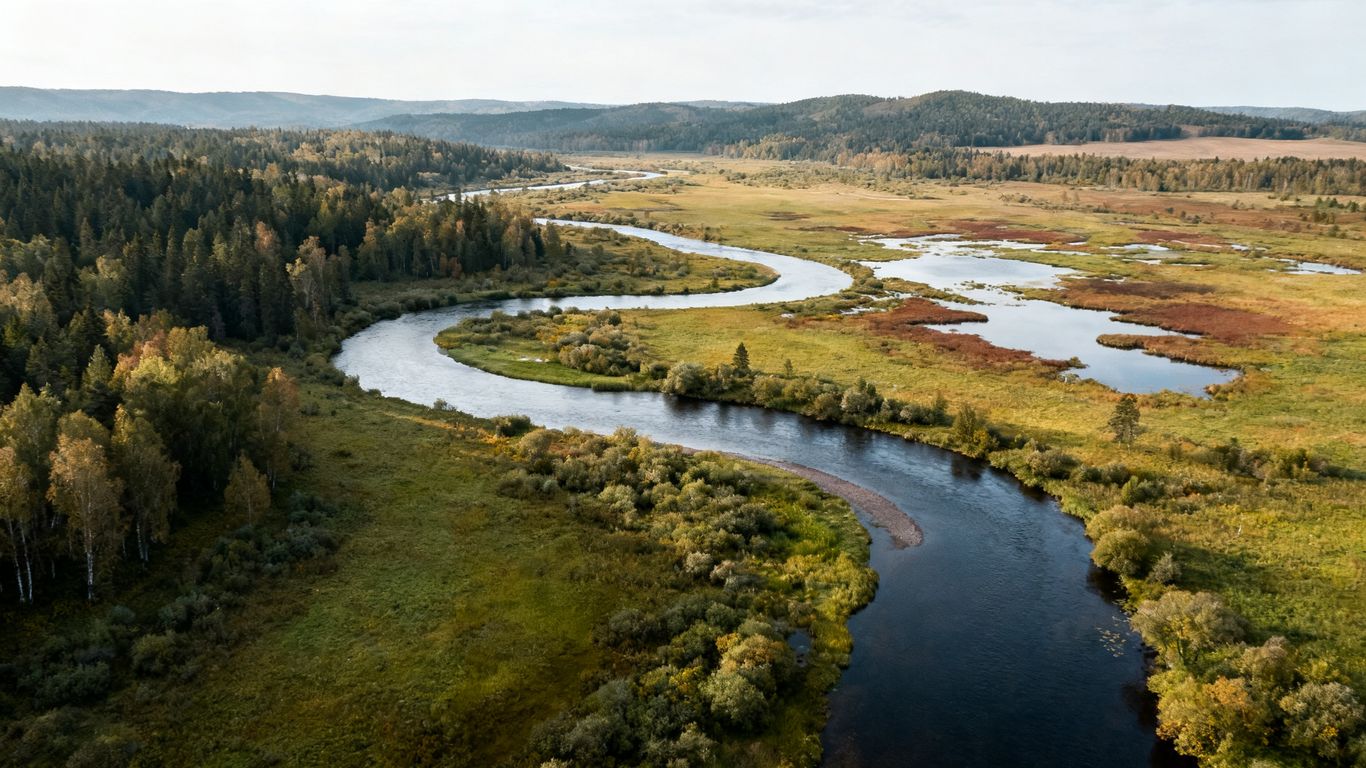
Individual ecology studies the needs, behaviours, and survival strategies of an organism in its environment. It can focus on foraging, reproduction, movement, or response to temperature variations. Population ecology then focuses on a group of individuals of the same species living in a given area.
Researchers then analyse births, deaths, migrations, and age structure. This data helps to understand why a population increases, stabilises, or declines, and to identify the factors influencing its dynamics.
Ecology of Communities and Ecosystems
A community brings together populations of different species that coexist in the same space. The study of communities focuses on the relationships between these species, while ecosystem ecology adds the non-living elements of the environment, such as water, minerals, and light.
A forest, a pond, or a wetland are thus studied as functional units. Predation, pollination, decomposition, and competition relationships contribute to their organisation and evolution.
Landscape Ecology and the Organisation of Territories
Landscape ecology examines how environments are distributed and connected in space. A hedge, a green corridor, or a wooded strip can facilitate species movement between two habitats. Conversely, a road or an urbanised area can fragment a territory and isolate populations.
This approach combines ecology with geography and planning. It helps to consider habitat continuity, the place of infrastructure, and the cumulative effects of territorial transformations.
Global Ecology and Major Planetary Balances
Global ecology is concerned with phenomena that transcend borders and influence the entire biosphere. Climate, oceans, nitrogen and phosphorus cycles, biodiversity, and land use are linked by complex mechanisms.
The concept of planetary boundaries allows us to examine these pressures on a global scale, while reminding us that global indicators do not always describe local realities. An analysis of planetary boundaries thus helps to link general trends to the causes and effects observed in territories.
Fundamental Concepts of Ecology
Ecology relies on a specific vocabulary that allows for precise descriptions of environments. Habitat, niche, food web, resilience, and biodiversity are not just buzzwords: each refers to an observable mechanism or property. Understanding them facilitates the interpretation of ecological issues.
Habitat, Ecological Niche, and Environmental Factors
Habitat is the place where a species lives and finds the conditions necessary for its existence. The ecological niche is broader: it describes the role occupied by this species, its resources, its constraints, and its relationships with other organisms. Two species can share a habitat while having different niches.
Environmental factors can be abiotic, such as temperature, humidity, pH, or salinity, or biotic, such as competition and predation. Their combination determines the presence, abundance, and distribution of species.
Food Chains and Food Webs
A food chain describes a transfer of matter and energy between organisms, from plant producers to consumers and decomposers. In nature, relationships are rarely linear: several chains intersect and form a food web.
This representation shows that a disturbance affecting one species can impact other levels. The disappearance of a predator, for example, can alter the abundance of its prey and transform vegetation or resource availability.
Energy Flows and Matter Cycles
Energy primarily enters ecosystems through solar radiation captured by producers. It then circulates between trophic levels, with losses as heat. Matter, on the other hand, is recycled through cycles: water, carbon, nitrogen, and phosphorus move between the atmosphere, soils, organisms, and aquatic environments.
The following table summarises some cycles studied in ecology and the main disturbances that can affect them.
| Cycle or Flow | Main Reservoirs | Possible Disturbances |
|---|---|---|
| Carbon | Atmosphere, oceans, soils, vegetation | Combustion, deforestation, climate change |
| Nitrogen | Soils, atmosphere, organisms | Fertilisers, intensive farming, water pollution |
| Phosphorus | Rocks, soils, sediments | Extraction, runoff, eutrophication |
| Water | Oceans, groundwater, rivers, atmosphere | Withdrawal, urbanisation, droughts |
This framework helps to understand why a local modification can have distant effects. It also shows that matter does not disappear: it changes form and compartment, sometimes with lasting consequences.
Biodiversity and Ecosystem Resilience
Biodiversity refers to the diversity of species, genes, and ecosystems. It is therefore not limited to the number of visible animals or plants in an environment. High diversity can provide more ecological functions and strengthen a system’s ability to absorb certain disturbances.
Resilience corresponds to an ecosystem’s ability to withstand a shock or return to functioning after a disturbance. It is never unlimited: beyond a certain threshold, an environment can permanently change its state.
Major Ecological Research Methods
Ecologists combine several methods to observe, measure, and interpret the transformations of living things. No single method is sufficient on its own: observation describes, experimentation tests, modelling explores scenarios, and bioindication provides information on the state of an environment. This complementarity makes conclusions more robust.
Observation and Monitoring of Species
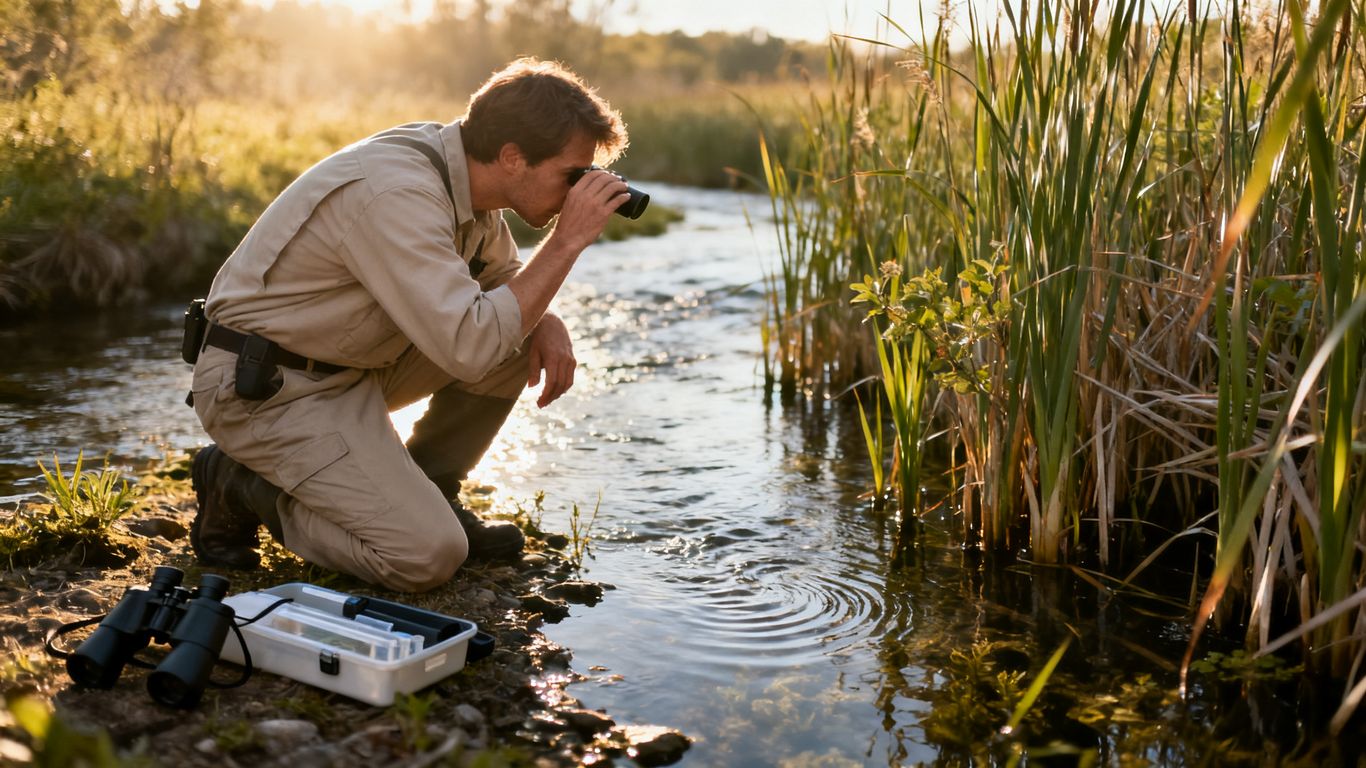
Observation is often the starting point of an ecological study. It can take the form of inventories, botanical surveys, camera traps, counts, or acoustic monitoring. Protocols must be sufficiently regular to allow for comparisons over time.
Monitoring a species is not just about counting individuals. It can also provide information on their age, behaviour, reproduction, movements, or habitat changes.
Laboratory and Field Experiments
Experimentation is used to isolate a factor and observe its effects. In the laboratory, conditions are controlled, which facilitates comparison between different groups. In the field, results are confronted with the real complexity of environments, with their interactions and natural variations.
A well-designed experiment specifies the question, the variables studied, the comparison conditions, and the limits of interpretation. It does not seek to reproduce all of nature, but to test a specific mechanism.
Modelling and Environmental Data Analysis
Ecological models represent relationships between variables to examine past evolution or simulate various scenarios. They can focus on population dynamics, pollution dispersion, or habitat evolution.
The quality of a model depends on the relevance of the data and assumptions made. The results must therefore be interpreted with caution, especially when observations are incomplete or interactions are numerous.
Bioindication and Assessment of Environmental Conditions
Bioindication involves using organisms or communities as indicators of environmental conditions. Certain species are sensitive to pollution, lack of oxygen, acidification, or habitat modification. Their presence, absence, or abundance provides information that complements physico-chemical measurements.
To assess an environment, researchers can examine, among other things:
- the diversity and abundance of present species;
- the quality of water, soil, or air;
- the continuity and structure of habitats;
- signs of disturbance or ecological recovery.
These indicators do not provide a single answer, but they allow for tracking a trend and comparing different sites. Their value increases when protocols are repeated and associated with contextual data.
Major Current Ecological Issues
Current ecological issues are numerous and often reinforce each other. Climate disruption modifies living conditions, while pollution, overexploitation, and habitat destruction reduce the capacity of ecosystems to adapt. A systemic approach is necessary to avoid treating each problem separately.
Climate Change and its Consequences
Climate change alters temperatures, precipitation patterns, and the frequency of certain extreme events. These changes influence migrations, reproduction, water availability, and species distribution. Marine, forest, agricultural, and urban ecosystems are affected, in different ways.
The consequences are also social and economic. Risks to health, agriculture, infrastructure, and access to water depend on the exposure of territories and their capacity to adapt.
Biodiversity Loss and Species Extinction
Biodiversity is declining due to the combined effects of habitat destruction, overexploitation, pollution, climate change, and the introduction of invasive species. The extinction of a species is not just a loss of heritage: it can alter essential interactions and functions.
Conservation therefore does not consist solely of protecting a few emblematic species. It requires maintaining functional habitats, ecological continuities, and sufficiently diverse populations.
Pollution of Soil, Water, and Air
Pollution can be chemical, biological, or physical. It affects soils, surface and groundwater, the atmosphere, as well as the organisms that live there. Its impact depends on the dose, duration of exposure, dispersion capacity, and species sensitivity.
Air quality illustrates this complexity: emissions, weather, and topography can combine to create degraded episodes. A resource dedicated to air pollution and smog helps to understand its mechanisms and risks.
Scarcity of Natural Resources
Freshwater, fertile soils, fish stocks, minerals, and biological materials are subject to increasing pressure. The issue is not just one of available quantity, but also of renewal rate, geographical distribution, and competing uses.
A resource may seem abundant globally and scarce locally. Ecology helps to place extractions within natural cycles and to assess the consequences of their intensification.
Soil Sealing and Habitat Degradation
Soil sealing transforms soils through construction, roads, car parks, or certain infrastructure. It reduces available space for living things, disrupts water infiltration, and fragments habitats. The effects can persist even when the direct impact appears limited.
Restoring ecological continuities, limiting urban sprawl, and reusing already developed sites are among the possible solutions. However, they require planning adapted to the characteristics of each territory.
Responses and Levers for Ecological Transition
The ecological transition refers to a gradual transformation of production, consumption, and land-use methods. It is not based on a single measure: it combines reducing pressures, adaptation, restoration, and evolving practices. Decisions are best based on data, but also on an analysis of their social and territorial effects.
Protection and Restoration of Ecosystems
Protection aims to maintain functional environments before they are degraded. This can involve protected areas, sustainable resource management, preservation of wetlands, or maintaining ecological corridors. Restoration occurs when the functions of an environment have been altered and a return to a more favourable state is possible.
Effective restoration begins with identifying the causes of degradation. Planting vegetation is not enough if pollution, fragmentation, or changes in water regimes persist.
Reducing Emissions and Sobriety in Usage
Reducing emissions requires acting on sources, equipment, and uses. Sobriety aims to decrease needs, while efficiency aims to provide the same service with fewer resources. These two levers can be complemented by less carbon-intensive energies and the electrification of certain uses.
The energy transition therefore concerns how energy is produced, distributed, and consumed. A presentation of the levers of the energy transition helps to distinguish between sobriety, efficiency, decarbonisation, and security of supply.
Agriculture, Industry, and Cities Facing Ecological Challenges
Each sector has specific areas for action. Agriculture can act on soils, water, inputs, and crop diversity; industry on processes, materials, and production flows; cities on mobility, buildings, green spaces, and water management.
Solutions must be evaluated over their entire life cycle. A change that is beneficial for one indicator may shift pressure to another resource or territory if the analysis is too narrow.
Public Policies and International Commitments
Public policies set objectives, organise funding, and regulate activities. They can act through regulation, taxation, planning, public procurement, or support for stakeholders. International commitments provide a common framework, but their effectiveness depends on their concrete implementation.
Coherence between scales is crucial. A national decision, a planning document, and a local action must be able to complement each other rather than contradict each other.
Individual Behaviours and Collective Action
Individual choices matter, especially when they become numerous and are integrated into appropriate infrastructure. Reducing certain journeys, limiting waste, extending the lifespan of objects, or preserving resources are concrete avenues, but they cannot rely solely on personal responsibility.
Collective action makes it possible to change rules, equipment, and social norms. It brings together associations, businesses, local authorities, researchers, and citizens around verifiable and revisable objectives.
To Remember the Essentials
Ecology offers a framework for understanding the relationships between living things and their environment. It encourages observing systems as a whole, measuring changes, and acting on causes rather than just symptoms.
Frequently Asked Questions
Is ecology solely a natural science?
No. It draws on life and earth sciences, but its subjects also intersect with geography, economics, public health, and social sciences when human activities modify environments.
What is the difference between an ecosystem and a habitat?
A habitat is the place where a species or population lives. An ecosystem includes the organisms present in an environment, the physical and chemical elements, as well as the interactions that connect them.
What is biodiversity?
Biodiversity refers to the diversity of species, genetic diversity within these species, and the diversity of ecosystems. It therefore includes differences between organisms and between environments.
Why are food chains important?
They show how energy and matter circulate between organisms. They also help to understand why a change in one population can have consequences for several other species.
How is the quality of a natural environment measured?
A combination of biological observations, physico-chemical measurements, and habitat data is used. Repeating surveys allows for tracking a trend rather than drawing a conclusion from a single measurement.
What are the main current ecological issues?
The main issues include climate change, biodiversity loss, pollution, resource scarcity, and habitat degradation. They are interconnected and must be addressed in a coordinated manner.
Does the ecological transition depend only on individuals?
No. Behaviours matter, but infrastructure, public policies, businesses, and collective organisations also determine the choices that are truly accessible and their scale.