
Key points
Climate change is a long-term shift in climate conditions, caused today mainly by human activities. Its effects are already measurable, but their future scale depends largely on future emissions and adaptation choices.
- Climate refers to patterns observed over long periods, not the weather on a single day.
- Burning fossil fuels and changes in land use contribute to current global warming.
- Air and ocean temperatures are rising, while ice is shrinking and sea levels are rising.
- The impacts affect natural environments, health, agriculture and economic activities unevenly.
- Reducing emissions and adapting to changes already under way are complementary approaches.
What does climate change mean?
Climate changes naturally, but the pace of change observed today and its causes merit particular attention. To understand the term climate change, it is important to distinguish the usual variations in weather from a long-term trend across entire regions or the planet. This distinction also helps us interpret data and extreme events without drawing conclusions from a single day.
Definition and timescale
Climate change refers to a long-term alteration in averages or climate patterns, such as temperature and precipitation. It is assessed by analysing observations collected over long periods, rather than by comparing two isolated days. A cold season therefore does not contradict a warming trend: it describes a temporary weather condition. For a refresher on the basics, see this introduction to climate change.
Difference between climate change and global warming
Global warming describes, more specifically, the rise in the Earth’s average temperature. Climate change is a broader concept: it also includes changes in precipitation, seasons, ice and other components of the climate system. The two expressions are often used together, but they do not refer to exactly the same aspect of the phenomenon.
Natural variability and long-term trends
Climate varies from year to year under the influence of natural factors, including variations in solar activity and major volcanic eruptions. These short-term fluctuations can temporarily amplify or dampen a trend, but are not enough to explain the warming observed over several decades. Distinguishing a lasting signal from temporary variations therefore requires long, comparable observation records; this guide to climate variability presents the key concepts.
What causes climate change?
The climate system receives and redistributes energy, and its temperature depends in part on the composition of the atmosphere. Human activities increase the amount of greenhouse gases that trap some of the heat. The phenomenon is not due to a single source: energy production, transport, industry, agriculture and changes in land use all contribute.
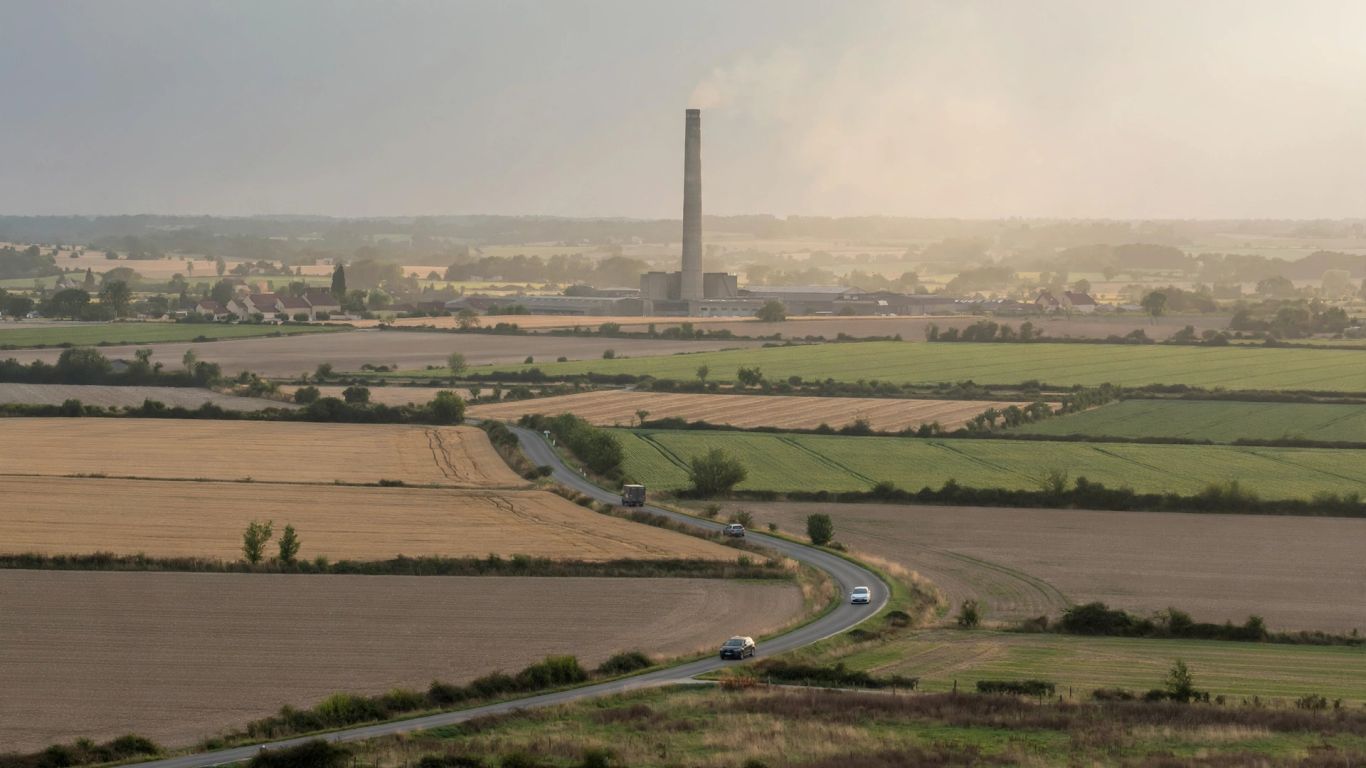
Greenhouse gas emissions from human activities
Burning coal, oil and gas releases carbon dioxide, while some agricultural and energy activities emit methane, among other gases. These gases strengthen the natural greenhouse effect by trapping more heat in the atmosphere. Transport is one of the areas concerned: for example, 유니오토모빌 offers comparisons of long-term car rental and leasing quotations for new cars. This service relates to car offers; choosing a vehicle and how it is used remain separate from reducing overall emissions.
Deforestation, agriculture and changes in land use
Forests store carbon, and their destruction or degradation can release some of it into the atmosphere. Agriculture also contributes to emissions, particularly through certain livestock and land-management practices. These effects are compounded by changes in land use, which alter both carbon stocks and the local characteristics of landscapes. Effects vary by practice and location: no single measure summarises all contributions.
Natural factors and their limited role in current warming
Natural factors continue to influence the climate, but they cannot explain the current trend on their own. Observations and scientific knowledge make it possible to compare the expected effects of natural causes with those of human emissions. Recent changes are primarily the result of the increase in greenhouse gases linked to human activities. This attribution helps explain why acting on emissions can influence the scale of future warming.
What evidence shows that the climate is changing?
Researchers do not rely on a single indicator to assess changes in the climate. They examine temperature measurements, the state of glaciers, sea levels and observed changes in precipitation. The convergence of several types of data makes it possible to distinguish a long-term trend from a local or temporary fluctuation.
Rising temperatures measured in the air and oceans
Measurements taken in the air and oceans show a long-term rise in average temperature. Results can be presented in different ways, but they are best understood by considering the indicator being tracked and the timescale. The table below summarises some of the evidence and what it can show.
| Indicator | Change tracked | What it tells us |
|---|---|---|
| Air temperature | Averages measured over time | The temperature trend near the surface |
| Ocean temperature | Heat accumulated in the water | Changes in the marine climate system |
| Glaciers | Changes in mass and area | How ice responds to climate conditions |
| Sea level | Repeated measurements of sea level | A change linked, in particular, to warming |
These observations complement one another: they describe different parts of the climate system, rather than a single isolated phenomenon. Long-term results are particularly useful because they reduce the influence of year-to-year variations.
Melting glaciers and rising sea levels
Many glaciers are retreating in a context of higher temperatures. Average sea levels are rising partly because water expands as it warms and partly because melting ice on land adds water to the oceans. This does not result in the same change in local sea level everywhere, but it increases risks for some coastal areas. It can also make it more difficult to protect exposed infrastructure and habitats.
Changes in precipitation and extreme events
Warming alters the water cycle and can influence the distribution of precipitation. Depending on the region and conditions, the risks associated with heavy rainfall, droughts or heatwaves may change in frequency, duration or intensity. However, it is important not to automatically attribute every extreme event to climate change: studies instead assess how climate change has altered the likelihood or characteristics of an event. Key phenomena to monitor include:
- Periods of intense heat and their duration.
- Episodes of heavy rainfall and the risk of flooding.
- Droughts and their effects on soils and water resources.
- Vegetation fires encouraged by favourable conditions.
This approach makes it possible to discuss trends and risks without confusing climate with weather. An analysis of the causes and effects of the phenomenon is also provided in this overview of climate changes.
What are the impacts of climate change?
The effects of climate change depend on how exposed areas are and their ability to cope with change. Ecosystems, human activities and infrastructure are not affected in the same way or at the same rate. Understanding these differences helps identify priority risks without reducing the issue to a uniform experience.

Consequences for ecosystems and biodiversity
Rising temperatures and changes in precipitation can shift the conditions to which species are adapted. Some environments change, while others face additional pressures, for example during heatwaves or droughts. Species’ ability to move or adapt depends on their biology and the continuity of their habitats. Projects involving the resources needed for the energy transition also raise environmental questions that need to be assessed: the EMILI lithium mine project in Allier is being discussed, in particular, in terms of water, biodiversity and mining waste.
Risks to health, agriculture and water resources
Heatwaves can increase health risks, particularly for vulnerable people and those exposed to heat in their homes or at work. In agriculture, growing conditions can be affected by heat, irregular rainfall and dry periods. Water resources are also affected: their availability varies by catchment, season and use. Risks must therefore be examined at a local level, rather than assuming the same consequences occur everywhere.
Unevenly distributed economic and social impacts
Damage and costs depend on the activities present, infrastructure and the resources available to anticipate or repair losses. Households and businesses do not all have the same resources to cope with hazards. Business continuity decisions can also vary according to the constraints specific to each sector: for example, the Falco Firearms terms of sale set out eligibility rules and shipping restrictions. This example concerns ordering and shipping policies and does not measure climate impacts. At a local level, strategies for attracting and retaining nearby customers are discussed in this guide to local marketing.
How might climate change develop?
Climate projections describe several possible futures, rather than a single prediction. They depend, in particular, on emissions over the coming decades and on how the climate system responds. It is therefore useful to distinguish what can already be observed, projected trends and the remaining uncertainties.
Climate scenarios based on future emissions
Scenarios are based on different greenhouse gas emission pathways. The higher emissions remain, the greater the expected future warming; rapid reductions limit some of this increase, without reversing changes already under way. These pathways are used to explore the consequences of collective choices, not to announce a certain outcome. For organisations, the design of decision-making systems and shared memory is also discussed by Environment Architecture, although this approach is not, in itself, a climate scenario.
Expected impacts at regional level
Expected changes are not uniform: regions differ in their climate, geography, resources and activities. Some may be more affected by heat or drought, while others need to pay particular attention to intense rainfall or rising sea levels. Regional projections help translate a global trend into practical questions for planning and essential services. For a business, assessing operational needs can include choosing which tools to use; Chris Gulli’s software comparisons cover categories such as marketing, productivity and finance, but do not constitute a climate risk analysis.
Uncertainties in projections and risk thresholds
Projections involve uncertainties linked to future emissions, models and local processes. This does not mean that everything is unknown: the broad trends are well established enough to guide preparation, while some specific consequences remain more difficult to quantify. Risk thresholds also depend on people’s and environments’ exposure and vulnerability. Prudent planning therefore considers several possibilities rather than relying on a single estimate.
How can the effects of climate change be limited?
Limiting the effects of climate change means acting both on the causes of warming and on its consequences. Decisions are made by governments, businesses, local authorities and households, with different levers available in different sectors. A structured approach starts by identifying relevant emissions and risks, then selecting appropriate actions and monitoring their implementation.
Reduce the emissions driving global warming
Reducing emissions involves, in particular, relying less on fossil fuels, improving energy efficiency and changing practices in transport, industry and agriculture. Production and procurement choices should also take account of the environmental impacts associated with the resources used. The EMILI project, presented in this analysis of the lithium project, illustrates the trade-offs to consider around supply, water and local impacts; mentioning it is not enough to establish an overall climate balance.
Adapt cities, infrastructure and activities
Adaptation aims to reduce exposure and vulnerability to changes already observed or expected. In cities, this can include preparing for extreme heat, managing rainwater and protecting essential infrastructure. Choices must match local risks and be reviewed as knowledge develops. For economic activities, practical planning can include identifying essential services, suppliers and continuity requirements.
Combine mitigation and adaptation to reduce risks
Mitigation reduces the emissions that drive warming; adaptation limits damage associated with current and future effects. The two approaches reinforce one another, but one cannot replace the other. For example, an organisation can monitor the emissions of an activity while also preparing its operations for climate-related disruption. In both cases, clear objectives and regular monitoring help establish whether the chosen measures are addressing the identified risks.
To conclude
Climate change is a long-term trend already visible in several indicators, and its consequences differ across regions and populations. Understanding its causes, tracking the evidence and taking uncertainties into account helps inform better responses. Reducing emissions while preparing societies for changes already under way remains the most coherent way to limit risks.
Frequently asked questions
What is the definition of climate change?
It is a long-term change in climate conditions, such as temperatures and precipitation patterns, observed over extended periods.
What is the difference between climate change and global warming?
Global warming refers to the rise in the Earth’s average temperature. Climate change also encompasses other long-term transformations of the climate system.
What are the main causes of current climate change?
Human greenhouse gas emissions, particularly those associated with burning fossil fuels, play the main role in current warming.
How do scientists know that the climate is changing?
They study several data series, including air and ocean temperatures, the state of glaciers, sea levels and precipitation.
Does climate change make every extreme event more intense?
No. Its influence depends on the type of event and the region; studies assess whether it changes the likelihood or certain characteristics of a phenomenon.
Are the effects of climate change the same everywhere?
No. The consequences vary according to local conditions, exposure, the activities present and the resources available to manage risks.
What is the difference between mitigation and adaptation?
Mitigation aims to reduce greenhouse gas emissions, while adaptation seeks to limit the damage associated with climate change.


