
Key Takeaways
Planetary boundaries offer a scientific framework for understanding the pressures on the Earth system. The latest assessments show that several of these boundaries have already been crossed, though this does not signify an immediate and uniform collapse.
- The model describes nine processes that contribute to Earth’s stability.
- Seven boundaries are reportedly now crossed, according to assessments published in 2025.
- The transgressions are linked to emissions, agriculture, land use change, and pollution.
- Boundaries interact: degradation in one area can amplify problems in others.
- Returning to a safe operating space requires measuring progress and transforming production systems.
Understanding the Concept of Planetary Boundaries
The concept of planetary boundaries seeks to define the conditions under which humanity can thrive without profoundly destabilising Earth’s major equilibria. It is not a moral judgment on human activities, but a scientific framework designed to highlight often dispersed risks. For businesses and communities alike, this approach serves as a reminder that a single indicator is never sufficient to describe the sustainability of a trajectory.
The Origin of the Model and its Scientific Objective
The model was first proposed in 2009 by an international team of researchers, building notably on the work of Johan Rockström. Its ambition was to identify the processes that regulate the stability and resilience of the Earth system, and then to estimate a relatively safe operating space for human societies. Research has been revised since then, as knowledge, available data, and assessment methods evolve.
This approach does not claim to set a perfectly clear line between a safe and a dangerous world. Instead, it provides common reference points for comparing pressures and guiding decisions. A summary of planetary boundaries thus helps to place the model within its history and recent assessments.
The Difference Between a Planetary Boundary and a Collapse Threshold
A planetary boundary is not a switch that automatically triggers collapse the day after it is crossed. It represents a risk zone: the further pressures move away from the safe operating space, the higher the probability of severe disruptions. The transition between zones can be gradual, with variations depending on regions and ecosystems.
This distinction is crucial to avoid two misunderstandings. Stating that planetary boundaries have been crossed does not mean that all action is futile, nor that the planet is already doomed. It means that the margin of safety is shrinking and that decisions must take into account increasing, and sometimes irreversible, risks.
The Nine Processes Essential to Earth’s Functioning
The framework identifies nine processes: climate change, biosphere integrity, land-system change, freshwater use, biogeochemical flows (nitrogen and phosphorus cycles), ocean acidification, atmospheric aerosol loading, and stratospheric ozone depletion. These cover closely interconnected physical, chemical, and biological dimensions.
Taken together, these processes describe the fundamental conditions that make Earth habitable for human societies. A presentation of the nine boundaries helps to understand what each one encompasses, beyond the technical terms. Their value lies precisely in this holistic view: climate cannot be separated from land, water, or living systems.
Uncertainties and Debates Surrounding the Indicators
Not all indicators are measured with the same degree of precision. Some boundaries rely on relatively well-monitored global variables, while others combine regional data, estimates, and thresholds that are still debated. The results should therefore be interpreted as evolving scientific diagnoses, not as exact figures.
Debates also concern the choice of variables, how data is aggregated, and the relevance of a global threshold for vastly different territories. These caveats do not render the model useless. Rather, they encourage its use with transparency, by indicating assumptions and margins of uncertainty.
Assessing Crossed Planetary Boundaries
The global assessment is concerning, but it deserves to be presented with precision. Recent evaluations indicate that several boundaries are in a zone of transgression, reflecting an increase in risks rather than a single, instantaneous event. The overall picture becomes clearer when examining the main processes separately.
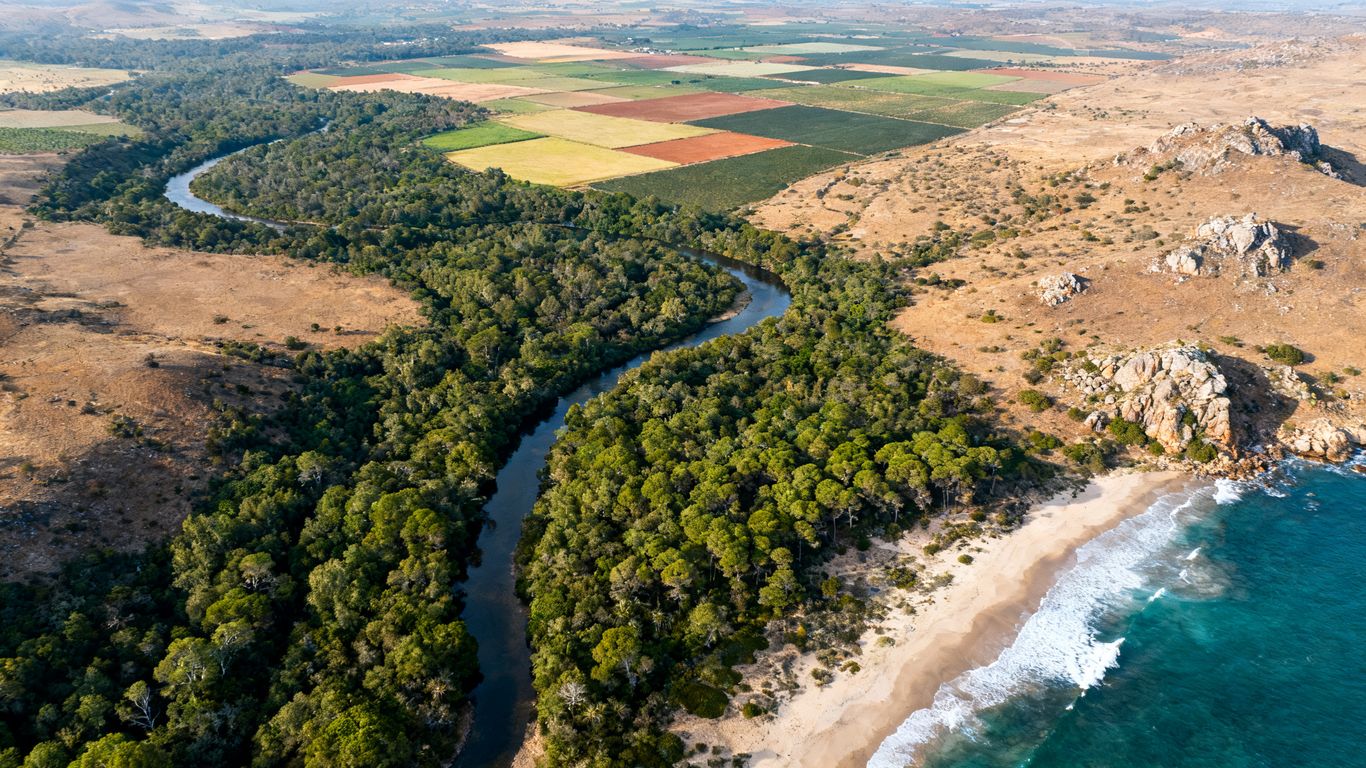
Climate Change and Carbon Cycle Imbalance
Climate change is linked to the accumulation of greenhouse gases in the atmosphere and the disruption of the carbon cycle. The burning of coal, oil, and gas, along with certain land-use changes, alters atmospheric composition and intensifies warming. The consequences manifest as higher temperatures, extreme weather events, and increased pressure on ecosystems.
Crossing this boundary is not just about a global average temperature. It also concerns the speed of change and the capacity of societies and natural environments to adapt. However, every fraction of a degree of warming avoided reduces certain risks, leaving concrete room for action.
Biosphere Integrity and Biodiversity Erosion
Biosphere integrity refers to the capacity of living systems to maintain their functions, interactions, and diversity. The extinction of species, decline in populations, and degradation of habitats weaken the ecological networks upon which pollination, soil fertility, and water regulation depend. Biodiversity is therefore not merely an aesthetic heritage; it is integral to the functioning of ecosystems.
The decline of life can also remain invisible in global averages. A local ecosystem can lose an essential function long before the signal appears in a global indicator. This boundary therefore requires cross-referencing global data with field observations.
Disruption of Nitrogen and Phosphorus Cycles
Agriculture uses large quantities of nitrogen and phosphorus fertilisers to increase yields. Some of these nutrients are not absorbed by crops and end up in soils, rivers, lakes, or the atmosphere. These flows can cause eutrophication of water bodies, greenhouse gas emissions, and ecosystem imbalances.
The problem is not the existence of nitrogen or phosphorus, which are essential for life, but their excessive and uneven circulation. More precise management of inputs, combined with adapted agricultural practices, can reduce losses without confusing productivity with input volume.
Land-System Change and Deforestation
Transforming forests, grasslands, or wetlands into agricultural, urban, or industrial areas alters habitats, water flows, and carbon storage. Deforestation is particularly significant in this dynamic, but it is not the only form of land-system change. Habitat fragmentation can be enough to isolate animal and plant populations.
The effects are often cumulative. Urbanised land absorbs less water, offers less space for wildlife, and can increase the risks of flooding or heat islands. Protecting existing spaces is generally more effective than trying to rapidly recreate lost functions.
Freshwater, Novel Entities, and Ocean Acidification
Freshwater is affected by abstraction, changes in rainfall patterns, and the degradation of watersheds. The boundary for novel entities concerns substances and materials introduced into the environment, particularly certain chemical compounds and persistent pollutants. Their production and diffusion sometimes exceed the capacity of ecosystems to absorb or degrade them.
Ocean acidification is primarily caused by the absorption of atmospheric carbon dioxide. It alters marine chemistry and weakens organisms that build calcareous structures. Assessments reported in 2025 have added this boundary to the transgressions already identified, bringing the total to seven crossed boundaries according to available sources.
Current Status According to Latest Assessments
The latest available assessments present a global picture, but they should not be interpreted as a single, definitive report. The number of crossed boundaries depends on the publication date, the data used, and scientific revisions. Nevertheless, a consistent signal emerges: human pressures are simultaneously affecting several major Earth system equilibria.
Globally Crossed Boundaries
Work published in 2025 indicates that seven of the nine planetary boundaries have been crossed. Climate change, biosphere integrity, nitrogen and phosphorus cycles, land-system change, freshwater use, novel entities, and, according to the most recent assessments, ocean acidification are in this category.
The two boundaries generally described as remaining within the safe operating space are stratospheric ozone depletion and global atmospheric aerosol loading. This wording does not mean that all regions are unaffected. It describes a global average or estimate, which can mask concerning local situations.
Boundaries Nearing Transgression
A boundary nearing transgression warrants particular vigilance, even if it is not yet classified as crossed. Proximity reduces room for manoeuvre and makes future developments more sensitive to energy, agricultural, industrial, and land-use choices. It is often less costly to prevent transgression than to restore degraded ecological functions afterwards.
The classification must also be monitored over time. One boundary may remain stable due to effective regulation, while another deteriorates rapidly. A health check of the planet provides an educational overview of these risk zones and how they are colour-coded.
Why Results Vary According to Calculation Methods
Results vary because researchers do not always have a single indicator for each process. They may measure a global pressure, a concentration, a flow, or an ecological state, and then compare this value to an estimated safe operating space. Model updates can also alter the definition of a boundary or the quality of the data used.
Therefore, publications using the same version of the framework and the same time period should be compared. A difference in methodology does not invalidate the overall diagnosis, but it should prevent overly categorical conclusions. Rigour lies in distinguishing robust trends from uncertain estimates.
What Global Indicators Do Not Show at the Local Level
A global indicator can aggregate highly contrasting situations. Some regions consume more resources, emit more pollutants, or have greater capacity to adapt, while others bear the consequences with less historical responsibility. Planetary boundaries must therefore be supplemented by territorial and social indicators.
For an organisation, this local translation involves linking general issues to its activities, suppliers, flows, and stakeholders. Millennium Digital advocates a structured, data-driven approach to analyse situations and justify recommendations, which can help avoid overly general environmental statements.
Why Planetary Boundaries Are Being Crossed
The transgressions are not due to a single cause. They are linked to infrastructure, consumption habits, public policies, and economic relationships built over decades. Understanding these mechanisms allows us to move beyond mere observation and identify the most significant levers for change.
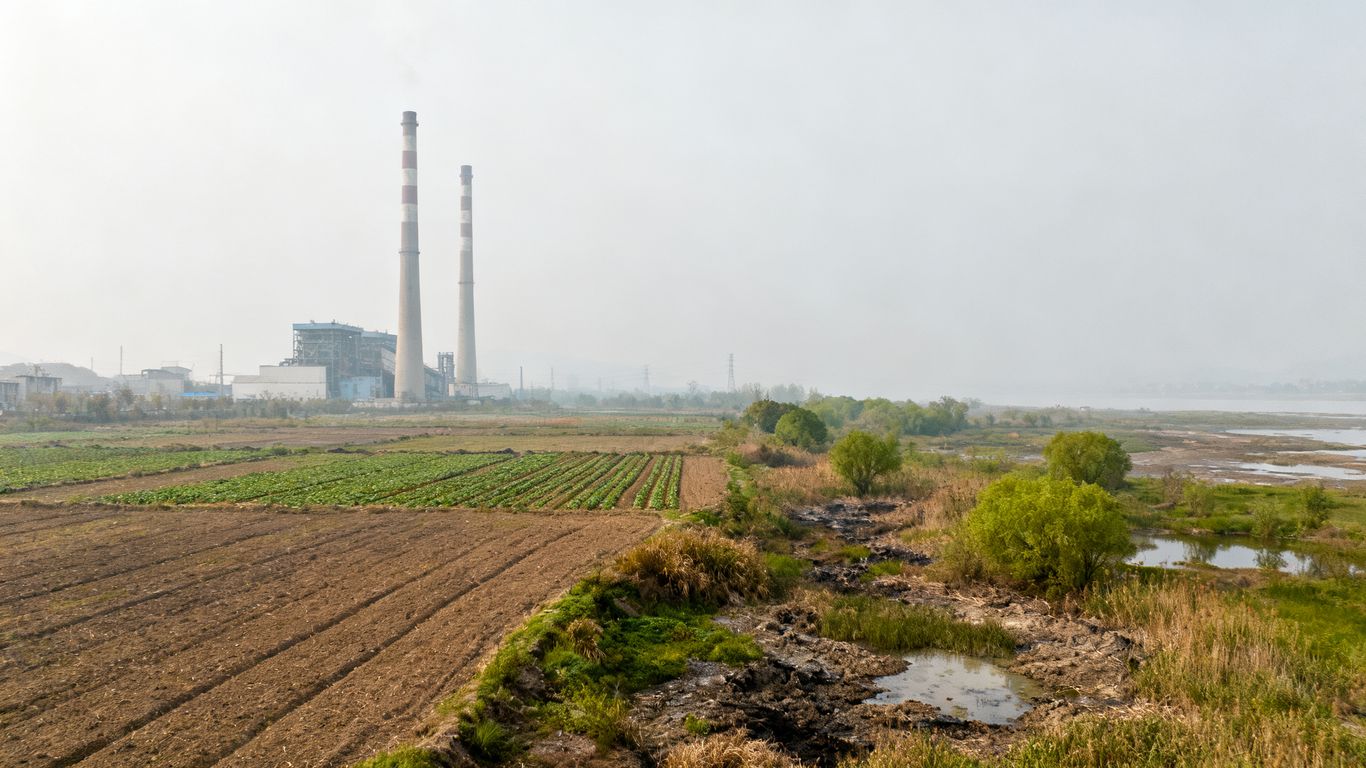
Dependence on Fossil Fuels
Coal, oil, and gas remain central to many transport, electricity generation, heating, and industrial systems. This dependence fuels greenhouse gas emissions and perpetuates investments that slow down the transition. It also exposes economies to price fluctuations and geopolitical tensions.
Reducing this dependence is not just about replacing one technology with another. It also requires reducing unnecessary consumption, improving efficiency, and organising networks capable of integrating lower-carbon sources. The speed of transformation is as important as its scale.
Intensive Agriculture and Livestock Farming
Intensive agriculture exerts pressure on soils, water, nitrogen and phosphorus cycles, and habitats. Livestock farming can exacerbate these pressures through land use, consumption of animal feed, and associated emissions. However, these activities meet real food needs: the transition must therefore combine production, accessibility, and environmental protection.
Solutions are not the same everywhere. They can include better nutrient management, crop diversification, soil conservation, and a reduction in food losses. Choices must be evaluated according to the ecological and social conditions of each territory.
Land Sealing and Habitat Destruction
The expansion of cities, infrastructure, and business areas transforms natural or agricultural land. It fragments habitats, disrupts water flows, and increases reliance on motorised transport. Destruction can be direct, but also progressive when nuisances render an environment unsuitable for certain species.
Limiting land sealing involves controlled densification, reuse of existing buildings, and protection of ecological corridors. These measures require local trade-offs, as a project presented as beneficial can have lasting effects on water, soil, and biodiversity.
Industrial Production and the Release of Chemicals
Industrial production introduces molecules, materials, and waste into the environment whose effects can be difficult to predict. Some substances persist, accumulate, or disperse far from their point of emission. The novel entities boundary thus highlights a problem of volume, control, and collective capacity to assess risks.
Effective policy combines source reduction, substitution where possible, substance traceability, and waste treatment. It must also consider combined effects, as a substance considered in isolation does not always reflect the actual exposure of an ecosystem.
Consumption Patterns and Inequalities Between Territories
Consumption patterns influence demand for energy, materials, agricultural land, and transport. However, this responsibility is not evenly distributed: consumption levels and capacities for action vary greatly between territories and households. A credible transition must therefore address both production volumes and equity issues.
For businesses, this means looking beyond final communication and examining the value chain, procurement, and usage. Millennium Digital, with its focus on SEO, SEA, and growth automation, reminds us through its marketing approach that a strategy can be structured around measurable objectives; applied to the transition, this logic must, however, integrate environmental and social indicators, not just commercial ones.
Interconnected Boundaries
The nine boundaries do not function as nine independent compartments. Pressure on the climate can alter water availability, weaken ecosystems, and accelerate biodiversity loss. This interdependence explains why a moderate transgression in one area can become more concerning when combined with several others.
Climate-Related Feedback Loops
Warming can reduce the capacity of certain soils, forests, and oceans to absorb carbon. The melting of ice also decreases the reflection of solar radiation, while the drying of certain areas can promote fires and additional emissions. These loops are not all of the same intensity, but they complicate projections.
Above all, they highlight the benefit of acting before amplification mechanisms become dominant. Climate policy therefore does not just protect the climate; it also helps to preserve water, soils, and habitats.
Links Between Biodiversity, Soils, and Water Resources
Living soils facilitate water infiltration, store carbon, and host a great diversity of organisms. When they are eroded, compacted, or sealed, these functions diminish. Habitat degradation can then increase the vulnerability of watersheds and make water resources more erratic.
Conversely, restoring a wetland, maintaining vegetation cover, or reconnecting habitats can yield multiple simultaneous benefits. Public policies therefore benefit from prioritising actions that reduce multiple pressures rather than those that simply shift the problem from one environment to another.
Pollution Exacerbating Ecological Imbalances
Chemical pollution, excess nutrients, and certain atmospheric particles can weaken organisms already stressed by climate change or water scarcity. A stressed environment tolerates new disturbances less well. The effects sometimes accumulate without being immediately visible.
This reality makes monitoring and prevention essential. Measuring a concentration at a given moment is not always sufficient: it is also necessary to track persistence, dispersion, mixtures, and population exposure.
Risks of Cascade Effects and Irreversible Changes
When multiple boundaries are crossed, the risks of rapid and difficult-to-reverse changes increase. The loss of a habitat, for example, can alter water and carbon cycles, and then worsen the survival conditions for other species. This is not about predicting a collapse date, but about recognising that the margins of safety are narrowing.
This uncertainty justifies a precautionary approach. Waiting for perfect proof can lead to acting too late, especially when ecosystem restoration takes decades or is not guaranteed.
Consequences for Human Societies
Planetary boundaries describe biophysical processes, but their consequences are profoundly social. They affect access to water, food production, health, infrastructure, and economic stability. The impacts are neither instantaneous nor uniform: they depend on exposure, vulnerability, and adaptation capacity.
Risks to Food and Water Security
Soil degradation, droughts, floods, and ecosystem disruption can reduce the regularity of agricultural production. Water availability becomes more uncertain when abstraction increases or rainfall patterns change. Tensions can then arise between agricultural, industrial, domestic, and ecological uses.
Food security therefore depends not only on the volume produced. It also relies on crop diversity, soil quality, the robustness of supply chains, and the capacity to distribute resources equitably.
Effects on Public Health
Heatwaves, air pollution, the spread of certain infectious agents, and the effects of water scarcity can increase health risks. Vulnerable populations, particularly the elderly, children, and those with pre-existing conditions, are often more exposed. The psychological impacts of disasters and loss of livelihoods should not be overlooked.
Prevention involves prepared health systems, accessible alerts, and policies that reduce pollution sources. Public health thus becomes a central argument for environmental policies, not a secondary consequence.
Economic and Geopolitical Consequences
Environmental degradation can damage infrastructure, disrupt supply chains, and increase the cost of insurance or access to resources. It can also displace populations and intensify tensions over water, land, or energy. Businesses must integrate these risks into their strategies rather than treating them as exceptional events.
Serious economic analysis must consider deferred costs and indirect effects. Savings made in the short term may become pointless if they lead to significantly higher repair, adaptation, or health costs.
Populations Most Exposed to Environmental Degradation
The most exposed individuals are often those with the fewest resources to protect themselves. Residents of coastal areas, regions experiencing water stress, or highly urbanised neighbourhoods may face particular risks. Inequalities in income, access to healthcare, and political representation strongly influence adaptation capacity.
This dimension necessitates linking ecological transition with social justice. Effective measures must reduce environmental pressures without placing the main burden of costs on already vulnerable households and territories.
How to Return to a Safe Operating Space
Returning to a safe operating space does not rely on isolated actions. It requires reducing pressures at the source, protecting still-intact ecological functions, and monitoring progress with consistent indicators. The priority is to prevent the diagnosis of crossed planetary boundaries from remaining a mere observation.
Rapidly Reduce Emissions and Phase Out Fossil Fuels
Reducing emissions requires decreasing the use of fossil fuels in electricity, transport, buildings, and industry. It demands investment, standards, appropriate infrastructure, and a shift in usage. Efficiency gains are useful, but they must be accompanied by a real reduction in emissions, not offset by an overall increase in demand.
A credible trajectory combines sobriety, efficiency, and substitution. Businesses can start by measuring their consumption, identifying the highest-emitting areas, and prioritising actions according to their real impact.
Transform Agricultural and Food Systems
Agricultural transformation involves better soil conservation, limiting nitrogen and phosphorus losses, protecting water, and diversifying production. It also includes reducing waste, evolving dietary patterns, and supporting supply chains that can adequately remunerate producers. Solutions must be adapted to the climates, crops, and resources of each territory.
A well-constructed strategy distinguishes between immediately applicable actions and transformations that require several years. This planning avoids isolated announcements and allows verification of whether the results achieved truly correspond to ecological objectives.
Protect and Restore Ecosystems
Protecting forests, wetlands, soils, oceans, and habitats often remains the most direct way to preserve their functions. Restoration can re-establish certain capacities, but it does not always replace an ancient ecosystem. Therefore, the priority must be to avoid and reduce degradation.
Restoration projects must be monitored over time, with indicators for biodiversity, water, and soil quality. A restored area alone does not guarantee the return of ecological functions if nearby pressures persist.
Regulate Pollution and Persistent Substances
Pollution prevention involves better knowledge of substances, market access rules, controls, and replacement solutions. Producers must also improve traceability and end-of-life management of materials. For persistent substances, reducing emissions is generally more reliable than hoping for later treatment.
Policies must also avoid shifting pollution to another environment or territory. A comprehensive assessment examines the life cycle, uses, discharges, and cumulative consequences.
Measure Progress with Trajectories Compatible with Planetary Boundaries
Measuring progress requires linking dated objectives to verifiable indicators. An organisation can track its emissions, resource consumption, material flows, and the effects of its decisions on ecosystems. The quality of management depends less on the number of indicators than on their coherence with priority issues.
Millennium Digital highlights a structured, responsive, and data-driven methodology to support multi-channel strategies and measurable results. In an environmental context, this culture of audit and monitoring can be applied to defining a trajectory: establish an initial state, set targets, measure deviations, and adjust actions. The scientific framework of planetary boundaries can serve as a general reference for organising this reading, provided it is supplemented by sectoral and local data.
The Final Word
Crossed planetary boundaries signify a reduction in the margin of safety upon which human societies depend. The diagnosis is serious, but it does not impose fatalism: it sets priorities, reveals the interactions between crises, and calls for managing transformations with reliable data. Returning to a safer operating space will require rapid, coordinated, and time-evaluated decisions.
Frequently Asked Questions
What does the phrase « crossed planetary boundaries » mean?
It means that the pressures exerted on certain major processes of the Earth system have moved beyond the zone estimated to be compatible with a low level of risk. This indicates an increase in potential dangers, not an immediate collapse of the planet.
How many planetary boundaries have been crossed?
Assessments published in 2025 indicate that seven of the nine boundaries have been crossed globally. This figure may change with new data and revisions to scientific methods.
What are the nine planetary boundaries?
They concern climate, biosphere integrity, land-system change, freshwater use, nitrogen and phosphorus cycles, ocean acidification, novel entities, atmospheric aerosols, and the ozone layer.
Does crossing a boundary automatically cause collapse?
No. Crossing a boundary corresponds to an increased risk zone. The greater the pressure and the more it combines with other disturbances, the higher the probability of severe or irreversible changes.
Why are planetary boundaries interconnected?
Climate, water, soils, oceans, and biodiversity are part of the same major Earth cycles. A disturbance in one of these areas can therefore reduce the capacity of others to absorb pressure.
Do planetary boundaries also apply at the local level?
The framework is global, but its causes and consequences are territorial. Therefore, global indicators must be supplemented with local data on water, soils, emissions, habitats, and inequalities.
Can we return to a safe operating space?
Yes, certain pressures can be reduced, and some ecosystems can be protected or restored. However, success will depend on the speed of emission reductions, the transformation of food and industrial systems, and transparent monitoring of results.


