Key points
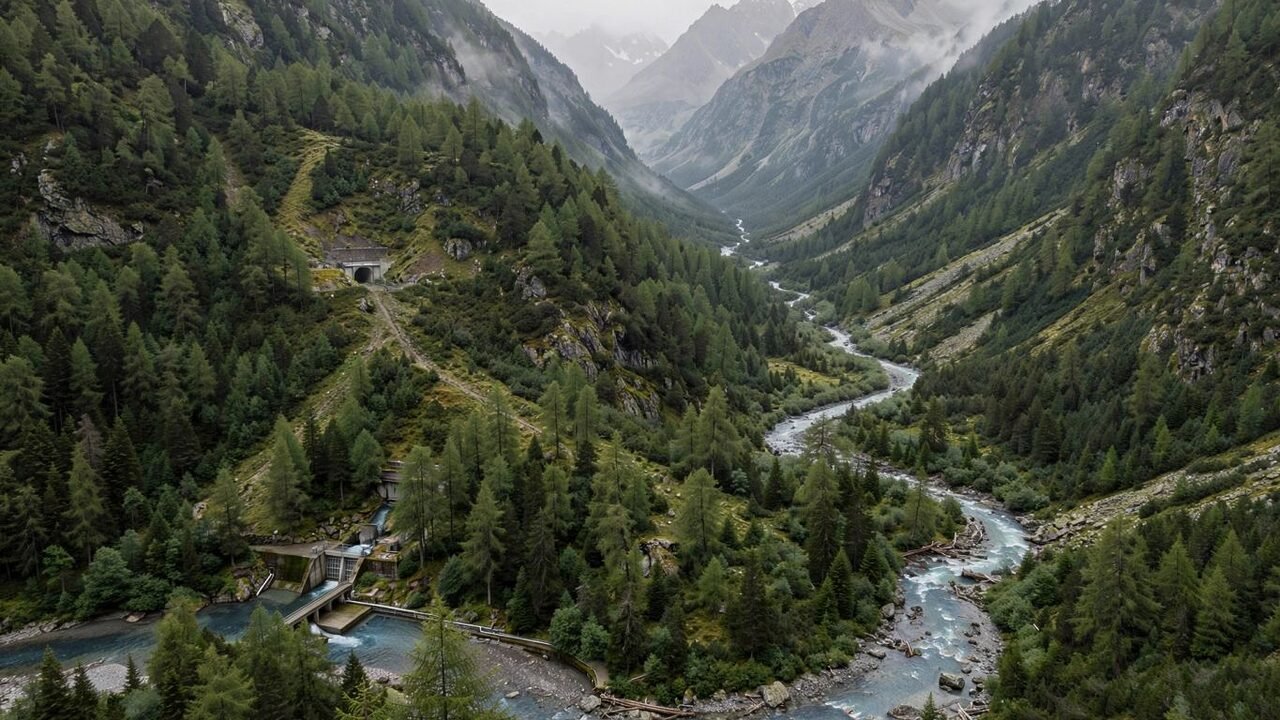
Romanche-Gavet is a hydroelectric scheme on the Isère, organised around a water intake, an underground gallery and a power station built inside the mountain. Its significance lies as much in its technical features as in the transformation of the valley’s historic structures.
- The power station is on the Romanche, at Livet-et-Gavet in Isère.
- An underground gallery carries water to a facility built inside the mountain.
- The installation has a capacity of 97 MW and its stated annual output is close to 560 GWh.
- The new scheme replaced several older power stations and structures in the valley.
- The project combines electricity generation, changes to the landscape and questions of ecological continuity.
Romanche-Gavet: what exactly are we talking about?
The name Romanche-Gavet refers to a hydroelectric scheme in the Romanche valley, in Isère. It is not a standalone structure, but a system comprising a water intake, underground conduits and a power station. The phrase ‘France’s largest dam’, sometimes used to describe it, does not accurately reflect its configuration.
A hydroelectric scheme in the Romanche valley
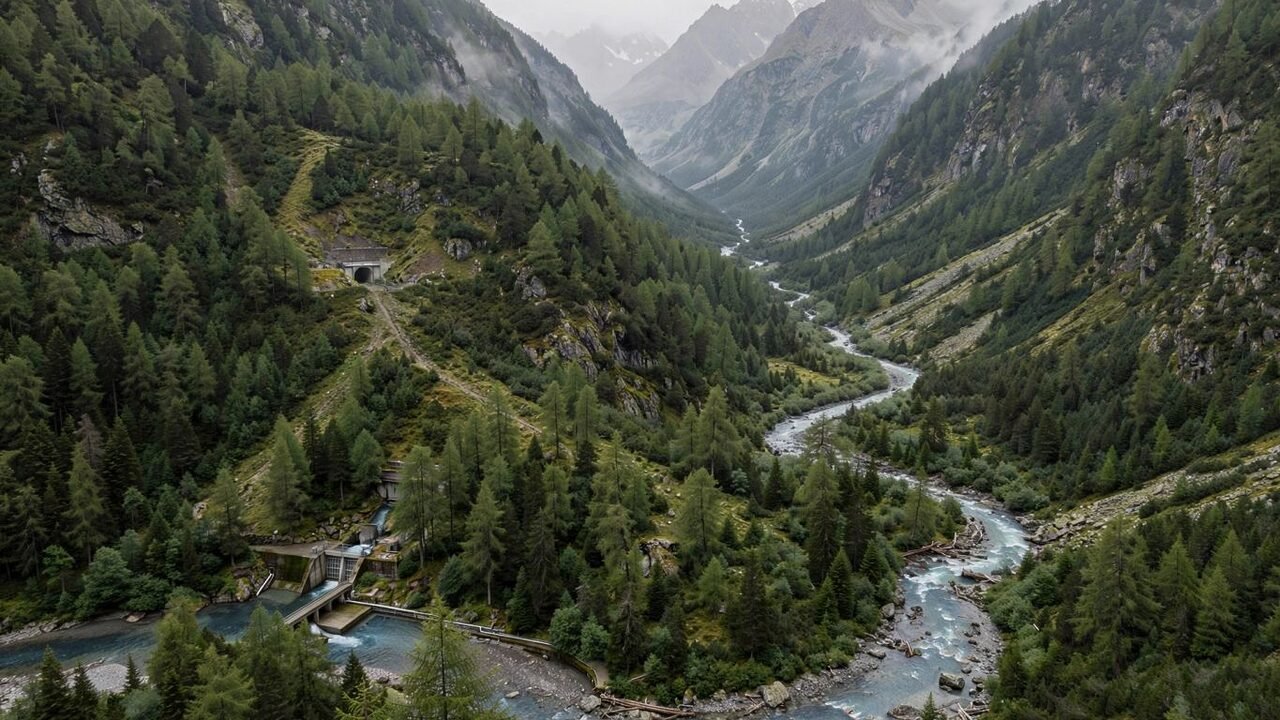
The Romanche flows through south-eastern Isère and has long been home to several hydroelectric installations arranged in a cascade. Romanche-Gavet is part of this history, with structures grouped around the communes of Livet-et-Gavet and Gavet. The site uses the difference in altitude between the water intake and the power station to generate electricity.
The name should therefore be understood as referring to a valley-wide scheme rather than a single dam. The system combines equipment visible beside the river with infrastructure excavated into the mountain. This layout helps explain its scale, which cannot be grasped simply by looking at the dam from the riverbank.
An underground power station rather than a single large dam
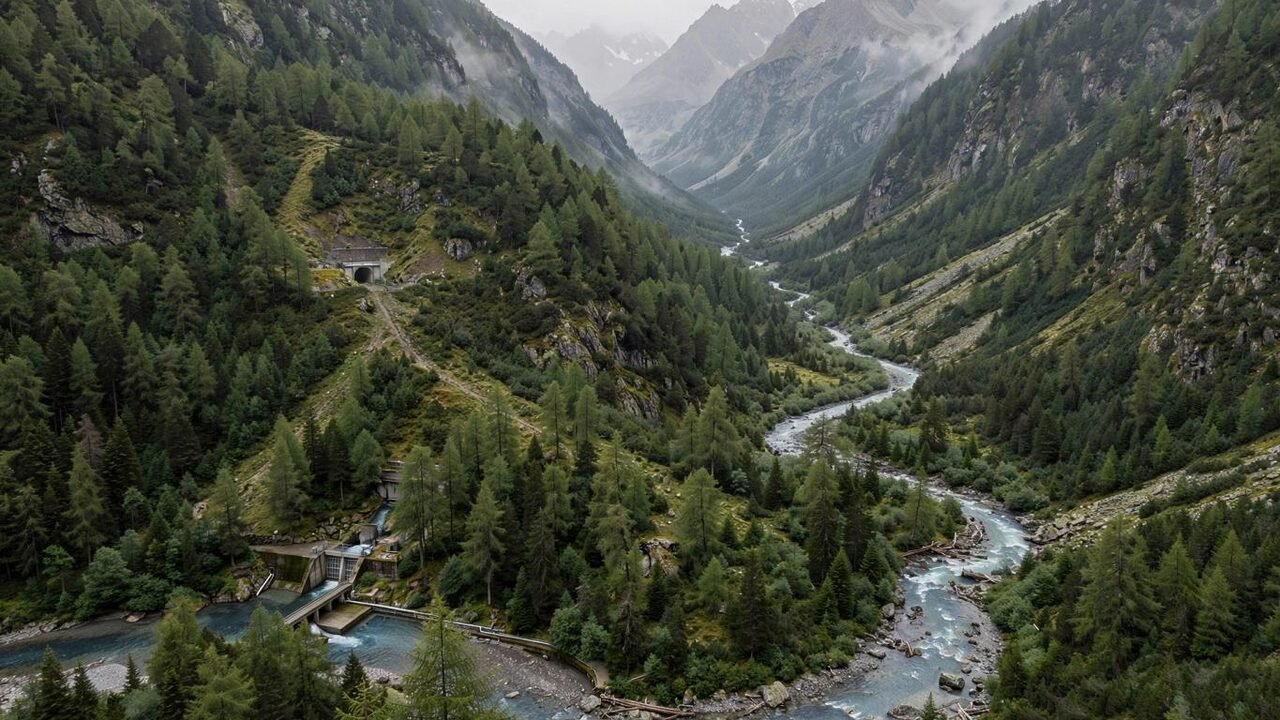
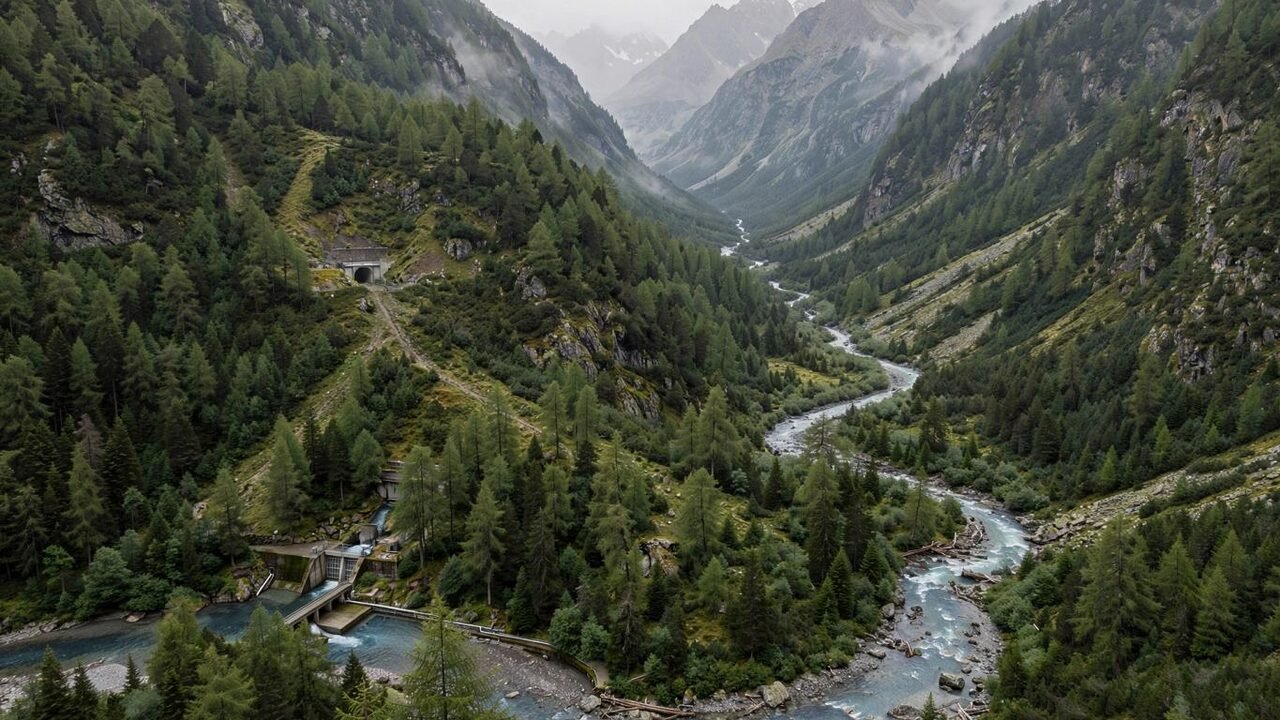
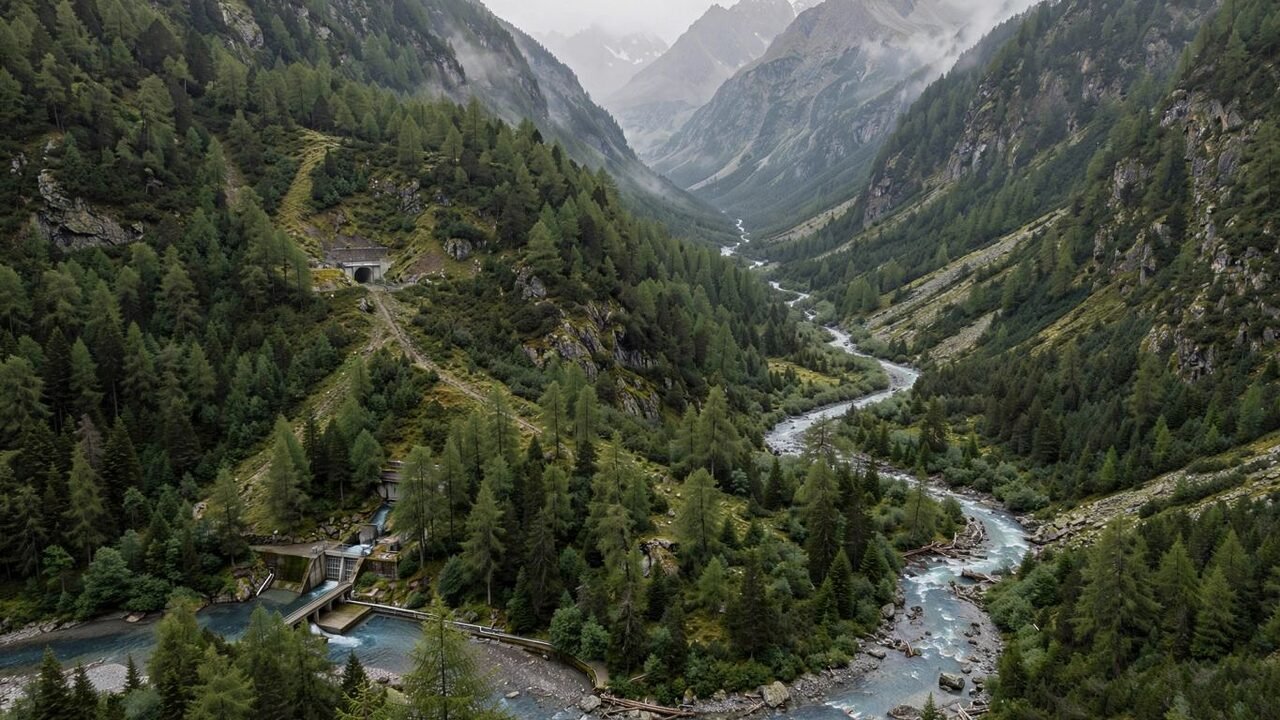
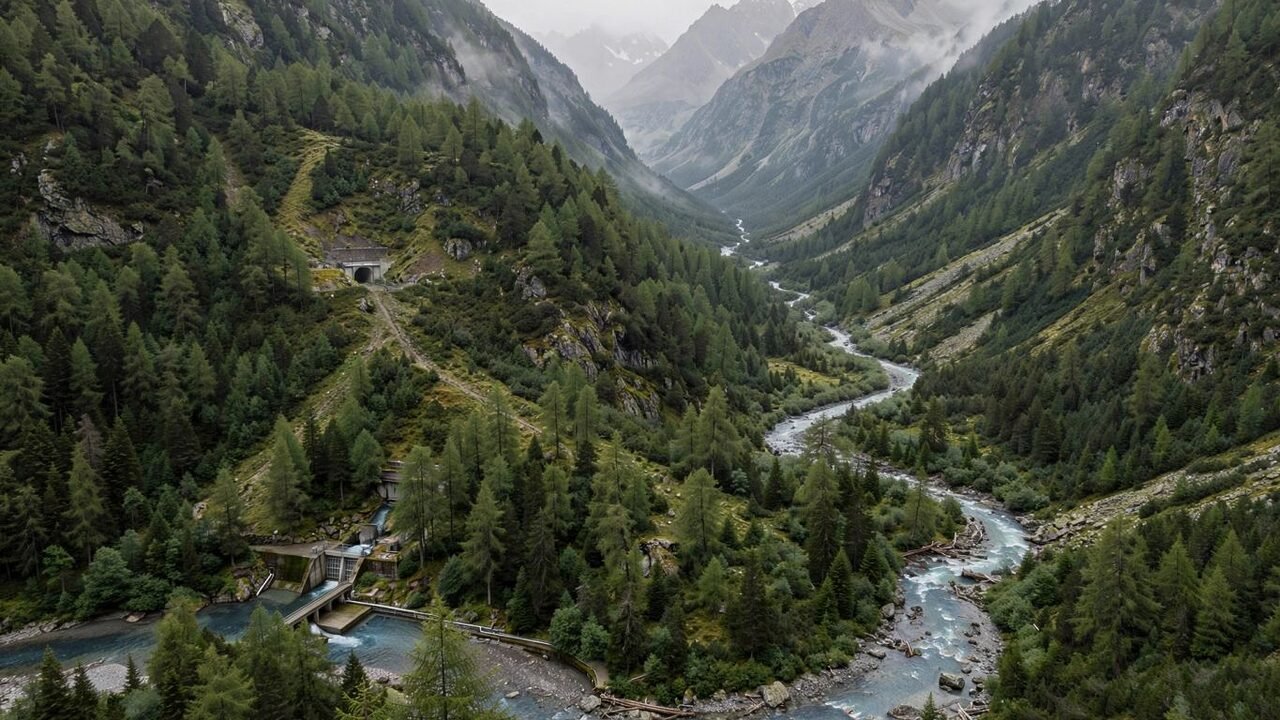
Unlike a large reservoir dam, where the reservoir is the dominant feature of the landscape, Romanche-Gavet relies on an underground power station and a managed route for the water. The intake is at Livet; the gallery then carries the water to the power station at Gavet. A significant part of the installation is therefore concealed within the terrain.
This layout concentrates the generating equipment in a single power station, whereas the earlier installations were spread along the river. This does not mean that the project has no surface structures: the water intake and associated works remain present in the valley. But the image of an enormous dam holding back a vast lake does not describe how the site works.
Why the phrase ‘France’s largest dam’ is misleading
The phrase may stem from the scale of the installed capacity or the notable nature of the underground power station. However, it conflates two different things: the dam that controls a water intake and the hydroelectric scheme as a whole. Romanche-Gavet is chiefly described as a high-capacity underground power station supplied by a substantial head of water.
To avoid ambiguity, it is more accurate to describe it as a hydroelectric scheme comprising an intake dam, a gallery and an underground power station. The page on the Romanche-Gavet hydroelectric power station also gives the main figures for the site’s capacity and output. This distinction helps explain why the catchy headline does not literally describe a giant dam.
How does the Romanche-Gavet scheme work?
It works on a familiar hydroelectric principle: capturing some of the river water, conveying it to a turbine and using the force of the drop. At Romanche-Gavet, much of the route is underground. This configuration allows generation to be concentrated in one facility rather than several power stations arranged in a cascade.
The water intake and the route to the power station
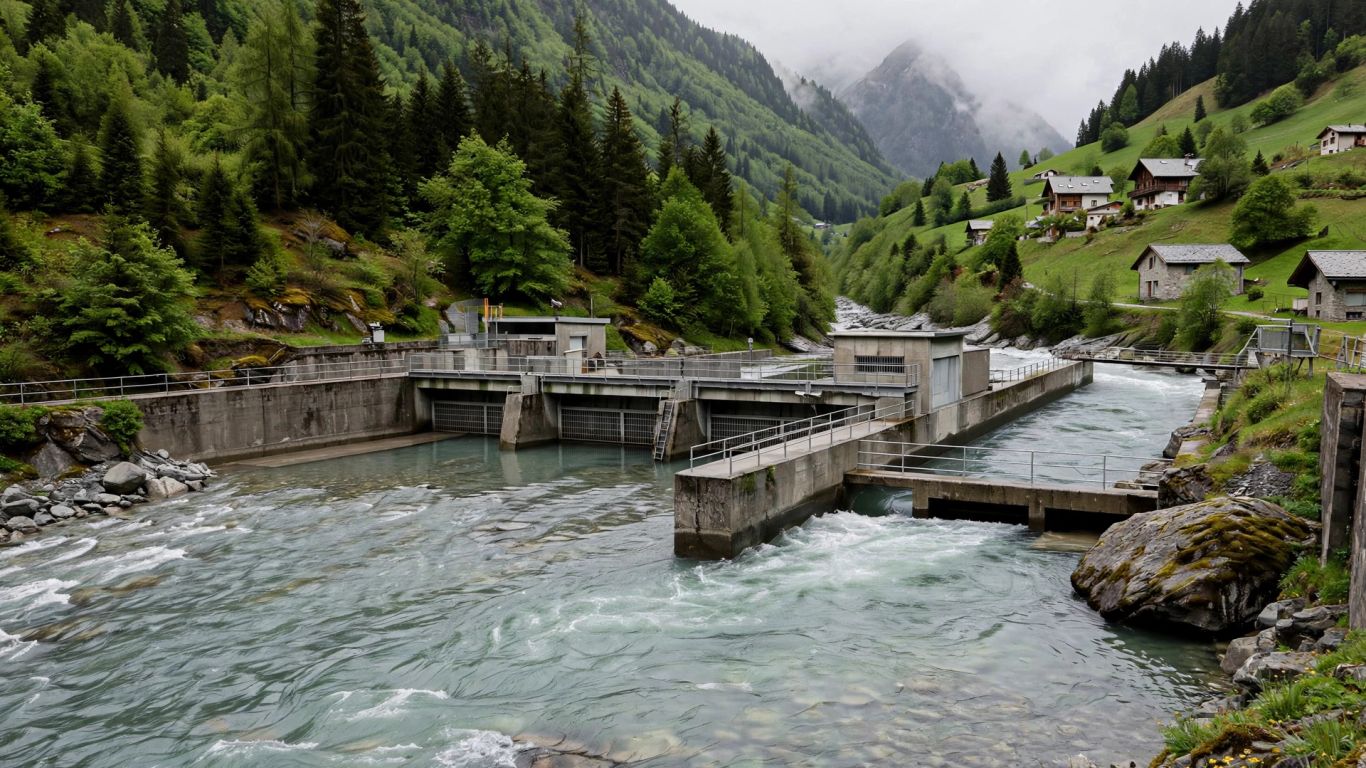
At Livet-et-Gavet, an intake structure diverts water from the Romanche towards the generating facilities. The system includes equipment to control the water’s entry and convey it into the gallery. After passing through the power station, the water rejoins the river.
The principle is therefore not to store large volumes of water in a vast reservoir, but to manage its conveyance to the turbine. Flow conditions and operating arrangements determine how much water can be used at any given time. It is this route, rather than the visible height of a dam, that makes the site’s operation clear.
The tunnel and head of water that drive the turbines
An underground gallery connects the intake to the power station at Gavet. The difference in elevation between the two points creates a head of around 280 metres, enabling the water to turn the turbines. The power station is built inside the mountain, reducing the space occupied by generating equipment above ground.
Published figures for the site give a design flow of 40 m³/s and two Francis turbines. These figures describe the installation’s technical capacity; they do not mean that the maximum flow is used continuously. Actual output varies according to hydrological conditions and the operation of the scheme.
Installed capacity and stated annual output
The figures give an idea of Romanche-Gavet’s scale, but they do not all measure the same thing. Installed capacity is the generating capacity at a given moment, whereas annual output is the amount of electricity generated over a period. The figures stated for the site can be summarised as follows:
| Measure | Stated figure | What it describes |
|---|---|---|
| Installed capacity | 97 MW | The installation’s generating capacity |
| Annual output | Around 560 GWh | Electricity generated in a year, depending on operating conditions |
| Head of water | Around 280 m | The difference in elevation between the intake and the power station |
| Design flow | 40 m³/s | The design flow specified for the installation |
These figures show why Romanche-Gavet is described as a high-capacity facility, without making it a large reservoir dam. The stated annual output is a benchmark, not a guaranteed amount that will be the same every year. River flow and operating arrangements affect the actual result.
Why did EDF build Romanche-Gavet?
The project was intended to consolidate the generation previously provided by several installations spread along the Romanche. The valley had power stations and dams built at different times, some of them old. The new scheme was designed to replace part of this complex with a single power station and modernised structures.
Replacing several old power stations and dams
Before Romanche-Gavet, several hydroelectric power stations dotted the valley. According to information on local history, the new facility replaced six historic power stations. This changed how generation was organised: instead of a series of power stations, the water is now conveyed to a shared underground power station.
Replacement is not simply a matter of moving machinery. It also involves modifying water intakes, conduits and some structures in the riverbed. For the valley, this is both an industrial project and a change in the day-to-day presence of infrastructure.
The main stages of construction through to commissioning
Construction took several years, and the power station was commissioned in 2020. Public information says work began in the early 2010s; some timelines distinguish between project preparation and the start of the main construction work. A landslide also caused a partial suspension of the work for an extended period.
A few milestones give a straightforward overview of this transformation:
- The project was prepared in the early 2010s.
- The work included the water intake, gallery and underground power station.
- A landslide disrupted part of the construction and led to a suspension.
- The Livet water intake was completed before the power station was commissioned in 2020.
This sequence is a reminder that the project did not depend on a single visible structure, but involved a combination of surface works and excavation inside the mountain. Commissioning marked the transition to centralised operation, while the future of the old installations formed another part of the project.
A facility designed to generate electricity over the long term
A hydroelectric power station is built to last: it requires major structures, regular operation and ongoing equipment monitoring. At Romanche-Gavet, the gallery and underground power station form the heart of a system designed to generate electricity from the Romanche. The stated capacity is 97 MW and the benchmark annual output is close to 560 GWh.
These figures describe expected capacity, but are not enough on their own to assess every impact of the project. Water management, maintenance of the structures and relations with the communes also matter over time. That is why the scheme is better understood as territorial infrastructure than as a simple generating machine.
What structures and technical features does the site have?
Romanche-Gavet combines surface equipment with infrastructure located beneath the mountain. The water intake is at Livet-et-Gavet, while the power station is at Gavet. This gives the site a linear layout, organised along the route taken by the water.
The Livet-et-Gavet water intake and associated equipment
At Livet-et-Gavet, the intake dam captures water from the Romanche and diverts it towards the gallery. It is a relatively low structure, designed to manage the flow of water rather than create a large reservoir. Associated equipment controls the intake and hydraulic operation.
The structure marks a tangible point in the system: this is where the river enters the generating system. Its technical role should be distinguished from that of the power station, where the energy of the water is converted into electricity. Together, these elements link the river to the turbines.
The underground gallery and the power station inside the mountain
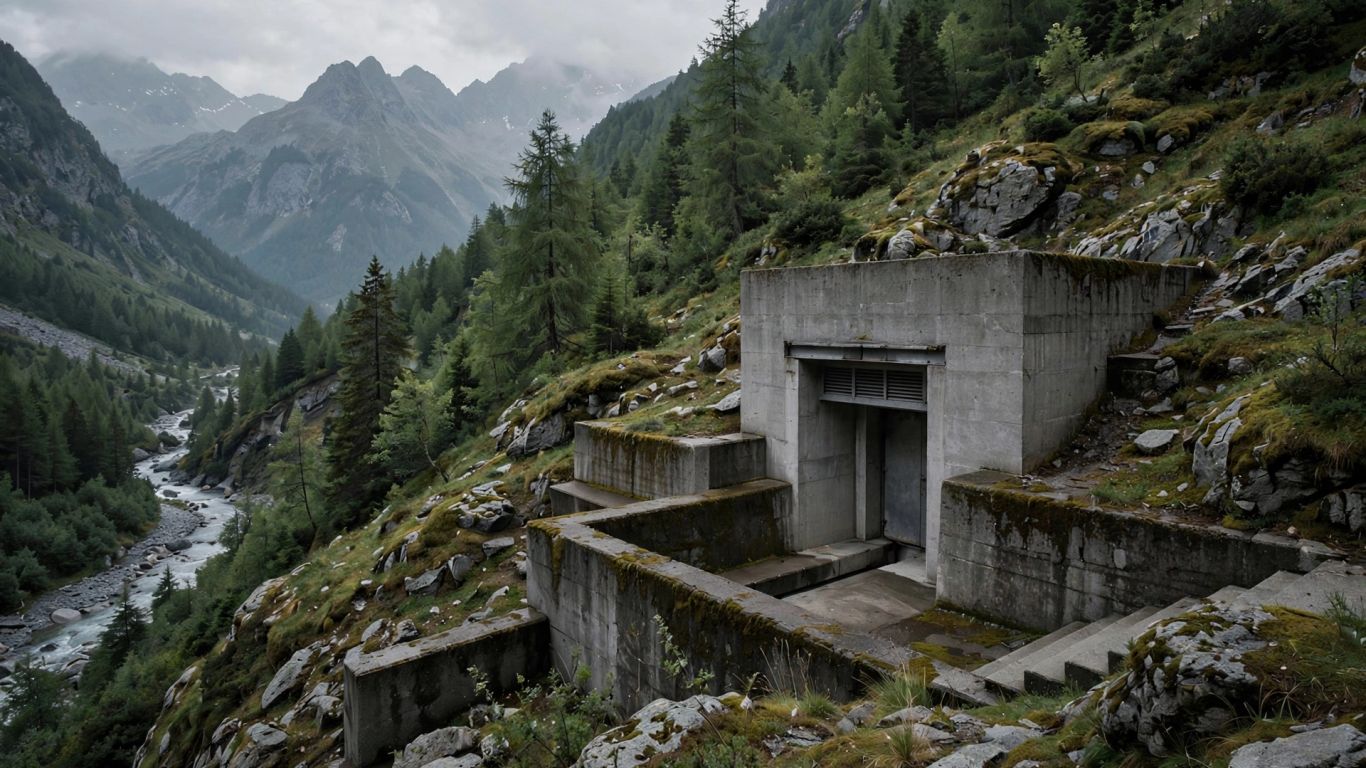
The gallery carries water from the intake to the underground power station at Gavet. The power station houses the generating equipment and harnesses the head of around 280 metres. Excavating and fitting out these spaces was a major part of the project, in addition to the structures visible in the valley.
Concentrating generation inside the mountain reduces the presence of a large power station above ground, but does not make the infrastructure as a whole invisible. Access routes and equipment needed for operation remain essential. The main difference is that the power station and much of the water route are out of sight.
Access routes, surface installations and their integration into the landscape
Surface installations include the water intake and the access routes needed for operation and maintenance. Their integration is best considered at valley level: some equipment is visible near the river, while the power station itself is underground. The landscape also bears traces of the historic installations and the changes made during construction.
The valley’s industrial history helps put these changes into context; the page on the hydroelectric heritage of the Romanche looks at the role of the old power stations and how they have changed. This history complements a technical understanding of the new facility, since the current scheme replaced a group of power stations that had been part of the landscape for several generations.
What environmental effects does Romanche-Gavet have?
The scheme changes how the water is managed and the valley’s industrial landscape. Its effects can be assessed at several levels: the river’s operation, the construction period and the future of the old installations. It is therefore preferable to distinguish between measures planned or implemented and outcomes that need to be monitored over time.
Ecological continuity and management of the Romanche’s flow
The presence of a water intake and hydraulic structures raises questions about ecological continuity and the flows left in the river. These factors are essential for aquatic environments and local uses of the watercourse. They depend on operating rules and the systems associated with the structures.
Hydroelectric generation does not remove these issues: it must be reconciled with the river’s functioning. Practical monitoring and management arrangements are therefore just as important as capacity specifications. For broader context, an overview of the causes and effects of climate change highlights how water resources and ecosystems are part of wider environmental dynamics.
Measures taken to limit the impact of construction
A project of this scale involves access routes, work areas and excavation in a mountainous environment. Limiting disruption, managing materials and restoring surfaces are among the issues to consider when assessing its footprint. Environmental assessments help structure this analysis, but do not replace monitoring of actual effects.
A sustainability assessment of the project notes that negative impacts were considered limited and that there could be potential long-term local benefits. It also assesses performance against several good-practice themes. These conclusions should be read as the findings of an assessment of the project, not as a claim that all impacts have disappeared.
The future of the old hydroelectric installations
The replacement of the power stations raised a heritage question: should the old buildings be demolished, preserved or put to a new use? The answer varies according to the condition and historical value of each installation, as well as the possibilities for repurposing it. Some structures are particularly important to the valley’s industrial memory.
The Vernes power station, in particular, is recognised for its heritage value, while other sites have been subject to plans for redevelopment or demolition. These different outcomes show that modernising generation does not automatically erase the history of a place. Instead, it requires decisions about what can be preserved and passed on.
What role does Romanche-Gavet play in the area?
Romanche-Gavet is part of a valley where hydroelectric power has helped shape economic activity and the landscape. The project changed how generation is organised, as well as the relationship between the communes, industrial facilities and the watercourse. Its history can therefore be read both in the new structures and in the traces left by the old ones.
The importance of the scheme to the valley and its communes
The power station is in Livet-et-Gavet, at the heart of an area shaped by industry and hydropower. Consolidating the installations changed how hydroelectric activity is distributed along the Romanche. For the communes, the issue concerns not only the operation of the site but also changes to the landscape and the memory of the old facilities.
The project’s importance to the area cannot be measured solely by its electricity output. Access routes, construction work, changes to the riverbed and the future of the heritage also have local consequences. This combination is what makes the project such a notable part of the valley’s contemporary history.
Jobs and activities associated with construction
Building a gallery, an underground power station and a water intake requires specialist trades and companies working at different stages. The construction work also created needs in logistics, transport and site operations. These jobs are linked to delivering the project and should not be confused with the permanent staffing levels needed to operate it.
The scale of a construction project is not enough to quantify its lasting benefits for the communes. To assess these, it is necessary to distinguish temporary jobs, local activity generated during construction and the needs associated with operation after commissioning. This distinction makes it possible to discuss the benefits without overstating their scale beyond what is documented.
Ways to explore the site and its history
Romanche-Gavet can be discovered by interpreting the landscape and consulting resources on local industrial heritage. Old buildings, accounts of the construction work and historical documents help explain how generation has changed in the valley. Access to operational facilities may be subject to safety rules and should not be assumed to be unrestricted.
If you are planning a visit, it is best to check with local organisations which places are accessible and whether any particular arrangements apply. Information on the construction project and the Alpine region can add to this perspective on the area, but does not replace local guidance. The history of the old power stations is also a useful starting point for understanding the site.
Other editorial sections may also cover unrelated topics, such as pomegranate juice, a court arraignment, wooden toys, mortgage refinancing or Skin Physics skincare; these do not describe Romanche-Gavet and should not be confused with resources about the valley.
In conclusion
Romanche-Gavet is a hydroelectric scheme organised around a water intake, an underground gallery and a power station built inside the mountain. Its stated capacity and output make it a major facility, but its significance also lies in replacing the old installations and in the environmental, heritage and territorial issues that accompany this transformation.
Frequently asked questions
Where is Romanche-Gavet?
The scheme is in the Romanche valley, in Isère, around Livet-et-Gavet and Gavet.
Is Romanche-Gavet a large reservoir dam?
No. It is a hydroelectric scheme comprising a water intake, an underground gallery and a power station inside the mountain, rather than a large reservoir dam.
What is the power station’s capacity?
The stated installed capacity is 97 MW. This figure indicates generating capacity, which is distinct from the electricity actually produced over a year.
What annual output is stated?
The benchmark annual output is close to 560 GWh. Actual output can vary according to hydrological conditions and operation.
How does the water drive the turbines?
Water drawn from the Romanche is conveyed through a gallery to the power station. The head between the intake and the power station provides the energy needed to drive the turbines.
Which old installations did the project replace?
The new scheme replaced several historic power stations in the valley, consolidating generation that had previously been spread across different installations.
Can you visit the power station?
Access to operational facilities should not be assumed to be unrestricted. It is best to check with local organisations about opportunities to visit and the access rules in force.