
Key points
A blockage of the Suez Canal can increase ship emissions, but the extent depends on the routes chosen, waiting times and decisions made by shipowners.
- Rerouting via the Cape of Good Hope lengthens some journeys between Asia and Europe.
- Longer voyages generally mean more fuel consumption.
- Waiting at anchor and port congestion can add to emissions.
- Speed, cargo load and vessel type change the emissions profile of each voyage.
- A reliable estimate compares like-for-like scenarios and sets out its assumptions.
Why a Suez Canal blockage disrupts maritime transport
The Suez Canal is a narrow passage on shipping routes linking Asia, the Middle East and Europe. When an immobilised vessel prevents others from passing, the consequences quickly spread beyond the site of the incident. Cargoes are held up, schedules are disrupted and shipping companies have to decide how to reorganise their services. A look back at the 2021 blockage provides a concrete illustration of the impact of such a disruption.
The canal’s role in routes between Asia and Europe
By avoiding the need to sail around Africa, the Suez Canal shortens many journeys between Asian and European ports. This reduction in distance helps shape vessel rotations and scheduled arrival times at ports. A slowdown on this route can therefore delay several successive stages of a voyage, even when the vessel directly affected is not itself immobilised. Cargoes vary widely, from sensitive products to consumer goods such as beach wedding accessories, and their delivery requirements are not all the same.
How an incident interrupts the flow of goods
An incident can temporarily make passage impossible or reduce the number of vessels able to transit. Ships already under way may then have to wait, turn back or consider another route, depending on their position and the instructions they receive. For goods that require particular monitoring, continuity of the journey also matters: the compliance requirements for cold-chain transport illustrate the constraints involved in shipping medicines under controlled temperatures. A disruption to a corridor therefore does not affect all cargoes in the same way.
Why delays spread beyond the canal
Delays build up when ships arrive at the same time at already busy ports or when planned rotations can no longer be maintained. A delay at a port can then push back a vessel’s departure for its next voyage. Tracking working hours and approvals, for example with ADO Time Tracker, relates to a different field, but serves as a reminder of how coordinated schedules depend on up-to-date information. In maritime transport, this coordination must also account for vessels, crews and port slots.
Rerouting via the Cape of Good Hope: the main driver of increased emissions
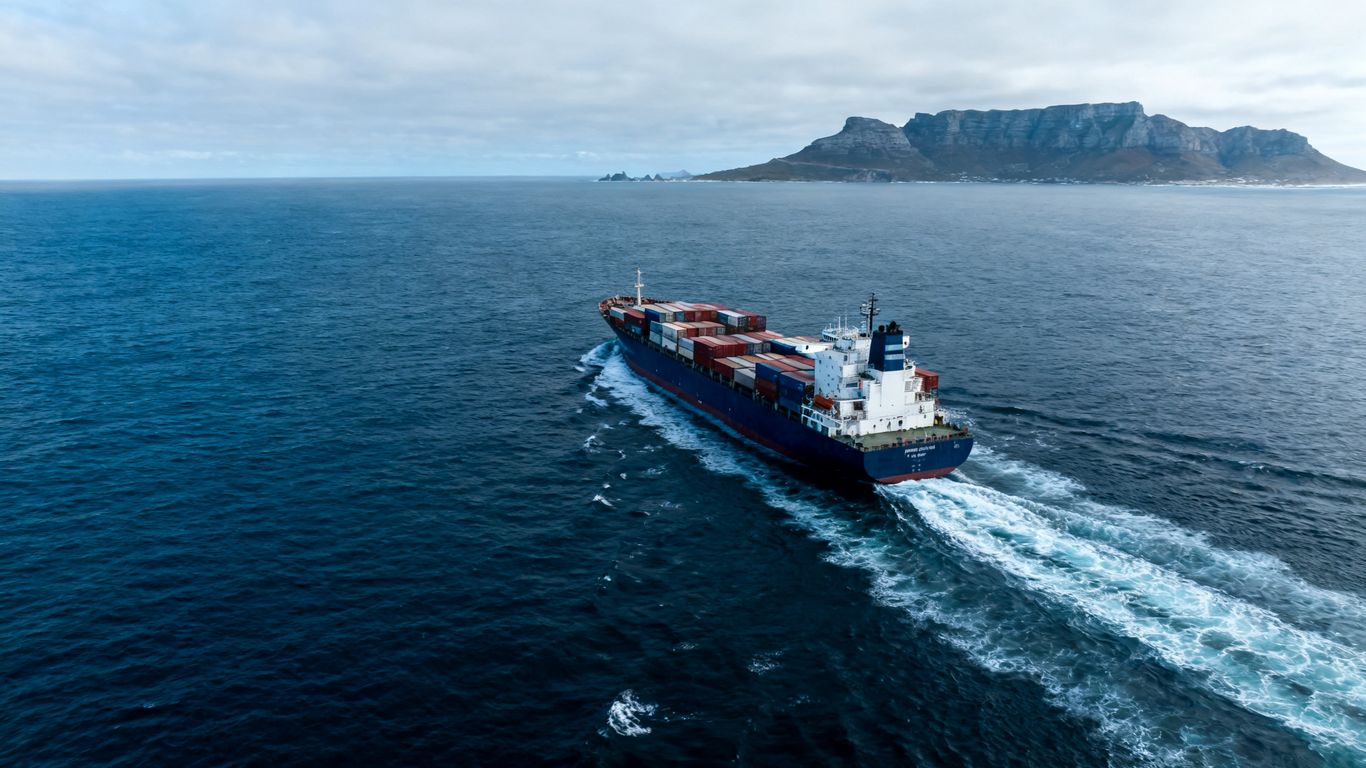
When the canal cannot be used, some vessels can sail around Africa via the Cape of Good Hope. This avoids waiting in the canal, but lengthens the voyage and changes fuel consumption. The result depends on the route actually taken and the vessel’s behaviour during the voyage. To understand the effect on emissions, it is therefore necessary to compare specific journeys rather than rely on a general estimate.
Thousands of additional kilometres, depending on the route
The additional distance varies according to the ports of departure and arrival, as well as the vessel’s position when the decision is made. A ship close to the canal entrance is in a different situation from one that has already covered part of the route. The detour can add a considerable distance, but there is no single figure that applies to every route. That is why the assessment starts with the route actually taken, rather than a single value applied to the entire fleet.
Fuel consumption increases with distance
At comparable speeds and under comparable conditions, a vessel covering a longer distance will generally consume more fuel. To make this relationship clear, the parameters of two scenarios can be compared without claiming that they apply to every vessel. The table below separates the information to be collected before drawing conclusions about emissions.
| Item compared | Route via Suez | Detour via the Cape |
|---|---|---|
| Distance | Usual route | Longer journey, depending on the ports |
| Time at sea | Service baseline | May increase because of the detour |
| Consumption | Estimate for the normal journey | Estimate adjusted to the actual route |
| Calculation conditions | Assumed speed and cargo load | Speed and cargo load for the rerouting scenario |
The comparison is only useful if the assumptions about speed, cargo load and time period are explicit. An increase in distance alone does not make it possible to assign a fixed amount of emissions to every vessel.
Additional emissions from every rerouted vessel
A rerouted vessel may emit more because it continues along a longer route. But emissions vary according to its type, cargo load, speed and sailing conditions. Across several vessels, the effects can add up, although they will not be identical from one ship to another. It is also important to distinguish emissions from the additional voyage from those produced while waiting or during any subsequent acceleration.
Queues and congestion: the impact of immobilised vessels
Rerouting is not the only consequence of a Suez Canal blockage. Vessels may wait at anchor, sometimes without knowing whether they will be able to resume their route or will have to be diverted. During this period, they remain operational units with energy requirements on board. Then, when the canal reopens, the arrival of many vessels within a short period can put fresh pressure on ports and maritime services.
Fuel consumed while waiting at anchor
Waiting does not necessarily mean that all consumption stops. A vessel may need to keep certain equipment running while it remains at anchor. The amount consumed depends on its configuration, the length of the wait and the operations carried out on board. A complete assessment therefore distinguishes the period spent immobilised from time spent at sea, rather than ignoring it in the calculation.
Auxiliary engines needed on board
Even when the vessel is not moving, auxiliary engines may supply the energy needed for various items of equipment and services. Their operation contributes to emissions while the vessel is waiting, with the level depending on the ship’s requirements. An estimate should therefore distinguish propulsion from the energy consumed on board while stationary. This prevents an immobilised vessel from being treated as if it produced no emissions.
The resumption of traffic and the effects of port congestion
When traffic resumes, vessels that have been held up may arrive at ports on a tighter schedule than planned. Concentrated arrivals can put pressure on berths and disrupt rotations, potentially pushing delays along the supply chain. Operators then have to adjust port calls and schedules as information becomes available. Disruptions to shipping in the Red Sea also show that crises can affect traffic far beyond a single physical incident.
Shipowners’ decisions can increase or limit the rise
Emissions associated with a disruption are not determined by distance alone. Shipowners’ choices — to wait, divert a vessel or change its speed — affect the duration and conditions of the voyage. These decisions take account of schedules, safety, port constraints and customers’ needs. Their effect on emissions is better understood by examining the trade-offs than by applying a single rule.
Speeding up to make up delays and keep to schedule
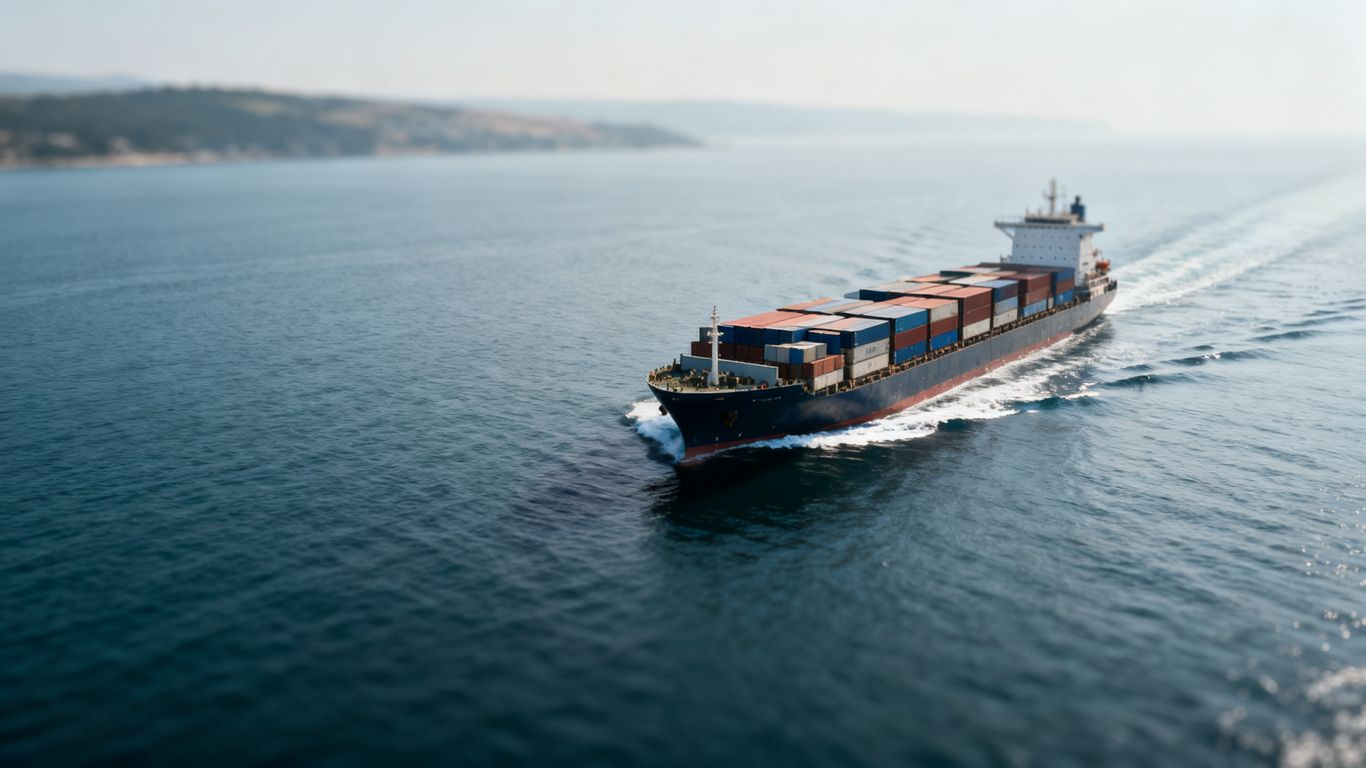
After a delay, travelling at a higher speed may seem like a way to get back on schedule. However, depending on the vessel and the conditions of the voyage, this strategy may increase consumption compared with sailing more slowly. The time saved must therefore be weighed against any additional fuel consumed. A delay made up at one stage may also leave constraints at subsequent ports.
Reducing speed to save fuel
Reducing speed can help limit consumption during part of a voyage, but it extends the time at sea. It is therefore not a one-size-fits-all solution: schedules, port-call windows and traffic conditions also matter. In an analysis, it is useful to compare several speeds using the same assumptions about distance and cargo load. This highlights the trade-off between voyage duration and consumption.
Balancing rerouting, waiting and service reorganisation
Shipowners have to choose between several options that have different effects on delays and energy use. In practice, a decision may combine several measures and change as information becomes available. The main factors to consider are:
- the vessel’s position when the incident occurs;
- the likely waiting time and the state of traffic;
- the speed planned for the rest of the voyage;
- arrival slots and port constraints.
This list does not identify one option as optimal in every case. Rather, it helps make the trade-offs explicit by distinguishing what relates to the route, time spent stationary and the management of port calls. On land, safety rules after a breakdown also matter, as illustrated by the rules for stopping on a motorway.
How to assess emissions linked to a Suez Canal blockage
Assessing the impact of a blockage first requires defining what is being measured and over what period. The additional voyage, waiting and changes in speed must be distinguished, then compared with a consistent baseline scenario. The results remain sensitive to the data used, particularly the vessel’s cargo load and fuel consumption. A transparent method helps explain differences between estimates, even when the figures are not directly comparable.
Distinguishing CO₂, nitrogen oxides and sulphur oxides
CO₂, nitrogen oxides and sulphur oxides are different categories of pollutants or gases to monitor. An assessment that does not specify which substances are being considered may give an incomplete picture of the impact. Emissions depend in particular on the fuel used and how the engines operate. The indicators should therefore be stated separately rather than grouped under the vague label of pollution.
Comparing emissions from a normal voyage with those from a diverted route
The comparison starts with a baseline scenario: the usual route, its duration and the conditions assumed. This can then be compared with the route actually taken, adding waiting time and changes in speed if necessary. A structured, data-driven approach is also central to the SEO, SEA and B2B acquisition automation strategies developed by Millennium Digital, although maritime transport indicators are different in nature. Here, the priority remains to document the assumptions specific to each vessel.
Taking account of vessel type, cargo load and speed
Two vessels covering the same distance will not necessarily have the same emissions profile. Their type, cargo load and speed affect consumption, while the circumstances of the voyage may also vary. To avoid a misleading comparison, these parameters should be recorded and conditions kept as comparable as possible. Measuring time spent waiting and under way also helps attribute emissions to the correct phase of the voyage.
A real increase, but one that varies with circumstances
A Suez Canal blockage can lead to higher emissions when vessels take a longer route, wait or change speed. But the increase is neither uniform nor automatic for every vessel. The circumstances of the incident, the number of vessels affected and shipowners’ responses all affect the overall emissions profile. For companies looking to structure their B2B acquisition, Millennium Digital offers multichannel strategies combining SEO, SEA and automation; this expertise does not replace an operational analysis of maritime emissions.
Why estimates differ from one blockage to another
Estimates can differ because they cover different vessels, routes or waiting times. Some may compare theoretical distances, while others are based on the routes actually taken. Assumptions about speed and cargo load also play a part. Before comparing two figures, it is therefore necessary to check exactly what they cover.
The influence of the incident’s duration and the number of vessels affected
The longer an incident lasts, the more it can affect departures, arrivals and the organisation of rotations. The number of vessels affected also matters: a disruption involving a few ships does not have the same cumulative effect as a long queue. The subsequent resumption of traffic can then concentrate arrivals and prolong delays at ports. The overall impact therefore depends as much on the scale of the blockage as on how traffic recovers.
Ways to reduce the carbon footprint of disrupted shipping routes
Better visibility of routes, waiting times and speeds helps show where additional emissions arise. Decisions can then be adjusted to the service’s constraints, without assuming that a single measure suits every vessel. Planning port calls and comparing scenarios help make choices clearer. Millennium Digital supports B2B lead generation and SEO, but reducing maritime emissions here depends on data and decisions specific to transport operators.
In conclusion
A Suez Canal blockage does not produce the same increase in emissions for every vessel: detours, waiting, speed and congestion combine in different ways. Distinguishing these factors and making assumptions explicit helps produce a more useful estimate and identify decisions that may limit the effects of a disruption.
Frequently asked questions
Why does a Suez Canal blockage increase emissions?
A blockage may force some vessels to take a longer route, wait or change speed. Each of these situations can increase fuel consumption and therefore emissions.
Are all vessels diverted via the Cape of Good Hope?
No. The decision depends in particular on the vessel’s position, the expected duration of the incident and the constraints of the service. Some vessels may wait rather than sail around Africa.
Does waiting at anchor produce emissions?
It can, because some equipment and auxiliary engines remain necessary on board. The level depends on the vessel, its requirements and the length of the wait.
Why does a vessel’s speed matter?
Speed affects fuel consumption and voyage duration. Speeding up to make up a delay may have an energy cost, while slowing down may delay arrival.
Which emissions should be distinguished in an assessment?
It is useful to separate CO₂ from nitrogen oxides and sulphur oxides. The substances considered and the calculation assumptions should be clearly stated.
Why do estimates vary between studies?
Studies may use different fleets, durations, routes or speeds. A meaningful comparison starts by checking the scope and assumptions of each estimate.
How can emissions be limited during a maritime disruption?
There is no single solution. Comparing route options, speed, waiting and the organisation of port calls helps shipowners make decisions suited to the constraints at the time.


